✍️ Does Abacus Improve Handwriting and Fine Motor Skills?
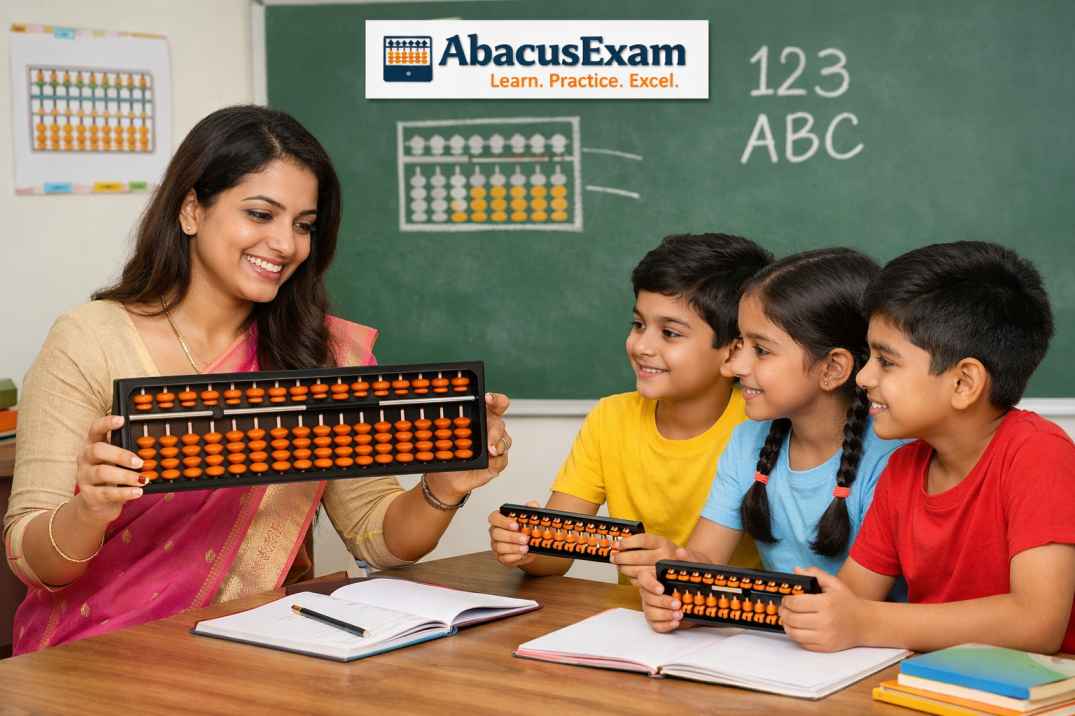
Every bead movement strengthens small hand muscles
🤔 Does your child have messy handwriting? Do they grip the pencil too tight – or too loose?
You’ve probably tried handwriting practice books. But what if the real solution isn’t more writing, but a completely different activity?
In this guide, I’ll explain how moving beads on a frame trains the small hand muscles that are essential for good handwriting – and what parents have told me about the results.
🖐️ The Hand-Muscle Connection: How Beads Help Pencils
Good handwriting requires three things: fine motor control, hand strength, and finger dexterity. This bead frame trains all three.
The standard technique uses the thumb to move lower beads and the index finger for upper beads. That’s the same pincer grip used to hold a pencil. Every slide is like a tiny exercise for those muscles.

Over time, children develop better control. They can move beads precisely without jamming them. That precision transfers to forming letters without shaking or pressing too hard.
I’m not claiming this is a miracle cure for dysgraphia. But as a supplemental activity, it’s excellent. One mother told me: “My son’s teacher asked what we changed. His handwriting went from barely legible to neat. The only thing different was abacus.”
📢 What Parents and Occupational Therapists Have Reported
I’ve collected feedback from hundreds of parents over the years. Here’s a common pattern:
“My 6-year-old had trouble holding a pencil correctly. After 3 months of abacus, her grip improved naturally. She doesn’t complain about hand pain anymore.”
– Neha, mother of 6-year-oldSome occupational therapists have even recommended this method as a warm-up for handwriting sessions. The repetitive, low-stress movement is calming and builds muscle memory.
One OT in Mumbai told me: “I suggest abacus to parents whose kids have weak fine motor skills. It’s more engaging than putty or therapy putty, and it also builds math skills. Two birds, one stone.”
🏋️ Specific Finger Exercises Used in This Training
Here are the exact movements that strengthen handwriting muscles:
1. Single bead slide – Use thumb to push one lower bead up. Use index finger to pull it down. Repeat 10 times per rod.
2. Multiple bead slide – Slide 2, 3, or 4 beads together. This builds coordination.
3. Alternate fingers – Move beads using only index finger (without thumb) for upper beads. This strengthens finger isolation.
4. Speed drills – Set a timer and move as many beads as possible. Builds hand endurance.
Do these for 2-3 minutes before handwriting practice. Parents tell me it works like a “hand warm-up.”
📝 Tips for Combining Abacus with Handwriting Practice
1. Use the right technique – Make sure your child uses thumb and index finger correctly. Bad technique won’t help.
2. Start with large beads – For very young kids (age 4-5), use a student abacus with larger beads. Easier to grip.
3. Do abacus first, then write – 10 minutes of bead work, then 10 minutes of handwriting. The muscles are warmed up.
4. Don’t force it – If handwriting is very difficult, consult an OT. This training is a supplement, not a replacement for therapy.
✍️ Want to see if your child’s fine motor skills improve? Try a free demo.
🎯 Book a free demo →❓ Frequently Asked Questions
How long until I see handwriting improvement?
Some parents notice better pencil grip in 6-8 weeks. Neater handwriting usually takes 3-4 months of consistent practice.
Can this help a child with dysgraphia?
It may help as a complementary activity, but dysgraphia requires professional assessment. Always consult an OT first.
What age is best for fine motor benefits?
Ages 4-7 benefit the most because their hand muscles are still developing. Older kids also see benefits, but the change is slower.
Do I need a special abacus for this?
A standard student abacus (13 rods, 7 beads each) works fine. Avoid cheap plastic toys with loose beads.
Can adults improve their handwriting with abacus?
Possibly, but adults have already developed motor patterns. It’s less effective than for children.
💛 Stronger hands, neater writing, faster math – all from one simple daily practice.
I’m Ashwani Sharma. Let me show you how this method can help your child – not just with math, but with the fine motor skills they use every day.
📲 Start your child’s fine motor journey →