Introduction

If you’re a parent trying to figure out the best path for your child’s math journey, I completely understand the confusion. Walk into any bookshop or scroll through social media, and you’re flooded with options—shiny apps promising lightning-fast calculations, online tutoring platforms, and yes, the good old abacus.
I’m Ashwani Sharma, and I’ve spent years watching children grapple with this very question. Based in Jaipur, I’ve seen both approaches transform young learners in beautiful ways. But here’s the thing—when we talk about abacus vs. mental math apps, we’re really asking something deeper. We’re asking how children actually learn to think with numbers.
Let’s sit down and sort this out together, like we’re having tea and chatting about what truly works.
Table of Contents
- How Abacus and Math Apps Approach Learning Differently
- The Screen Time Dilemma We Can’t Ignore
- Building Mental Math Skills That Last
- When Abacus May Not Be Enough
- What I’ve Noticed Watching Children Learn
- Benefits for Everyone in the Learning Triangle
- Frequently Asked Questions
- A Gentle Way Forward
How Abacus and Math Apps Approach Learning Differently
There’s something almost magical about watching a child’s fingers dance across an abacus. Those beads clicking and sliding aren’t just making noise—they’re building neural pathways. The physical movement creates what neuroscientists call muscle memory, but I call it something simpler: a bridge between the hand and the brain.
Math apps, on the other hand, offer flashy rewards and instant feedback. Get an answer right, and fireworks explode across the screen. It’s satisfying, no doubt.
The Visual Versus the Physical
With abacus training, children eventually graduate to mental abacus—where they visualize the tool in their mind and move imaginary beads. This is where the real magic happens. They’re not just memorizing facts; they’re creating a mental workspace for numbers.
Apps tend to rely more on repetition and speed. Tap the correct answer before the timer runs out. Level up. Repeat.
In my experience working with students across different countries, I’ve noticed that those who start with physical abacus develop a stronger number sense. They feel quantities in a way that screen-based learners sometimes miss.
Parent Guidance in Abacus Training Matters
Here’s something the app developers don’t tell you: the role you play makes a massive difference. When you sit with your child during abacus practice, you’re not just supervising—you’re modeling focus. Parent guidance in abacus training transforms a simple exercise into a shared experience.
Apps are designed for solo use. They’re convenient, sure. But convenience isn’t always what builds deep understanding.

The Screen Time Dilemma We Can’t Ignore
Let’s talk honestly about screens. Most of us are worried—secretly or openly—about how much time our children spend staring at devices. Between online learning, entertainment, and connecting with friends, their eyes are already glued to screens for hours.
Screen Fatigue Is Real
I’ve had parents from Norway to New Zealand tell me the same thing: “My child is done with screens by evening.” They come home from school, where they’ve been on computers, and the last thing they want is another screen-based activity.
Abacus offers something refreshingly different. It’s tactile. It’s quiet. It doesn’t buzz or ping for attention.
Hybrid Education Approaches That Work
Does this mean apps have no place? Not at all. Some of the most effective programs I’ve seen combine both approaches—physical practice with an abacus at home, supplemented by occasional app-based review. This hybrid model respects the child’s need for variety while building genuine skills.
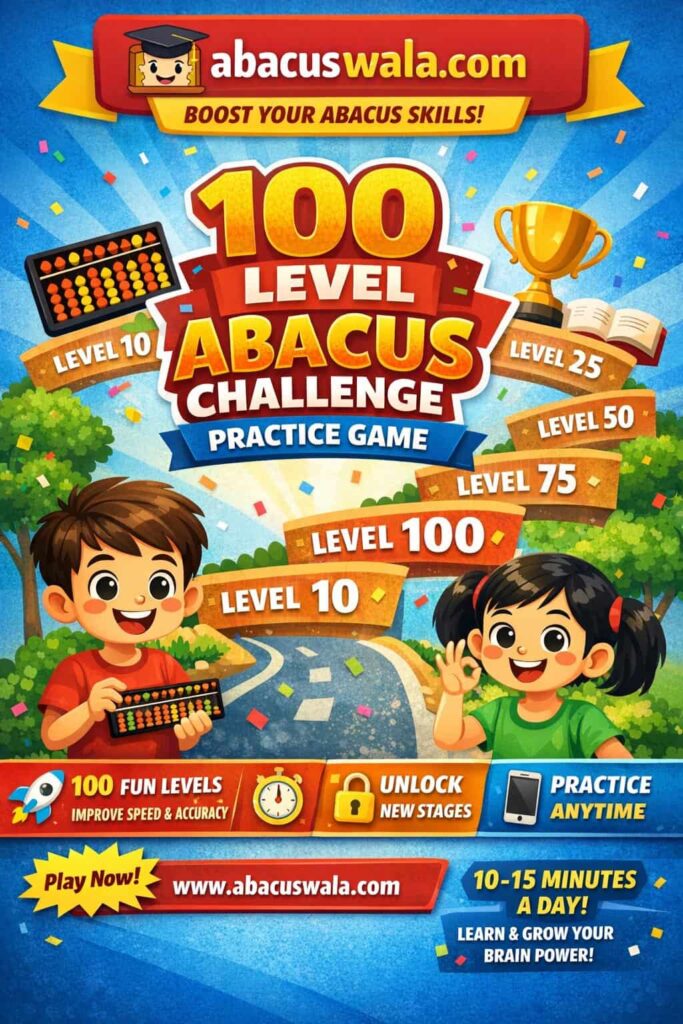
The All-in-One Abacus Learning System available through platforms like AbacusShiksha, AbacusExam, and AbacusWala recognizes this balance. These resources provide structured materials alongside digital support, giving families flexibility without sacrificing depth.
Building Mental Math Skills That Last
When parents ask me about abacus vs. mental math apps, what they really want to know is: which builds lasting skills? The answer might surprise you.
The Visualization Factor
Children who learn abacus first, then transition to mental calculation, develop what I call “seeing numbers.” They don’t just recall answers—they visualize the process. Ask them to add 47 and 38, and somewhere in their mind, beads are moving.
Apps often skip this visualization step. They train children to recognize patterns and memorize facts. That works well for straightforward problems. But when math gets more complex? The abacus-trained child often has an edge.
Supporting Children in Mental Math Development
How you support your child matters enormously. Supporting children in mental math isn’t about drilling them until they cry—it’s about creating small, consistent opportunities for practice.
Maybe it’s calculating the total while grocery shopping. Maybe it’s figuring out how many days until a birthday. These real-world moments, combined with structured practice, build confidence that no app can replicate.
When Abacus May Not Be Enough
I believe in being honest about limitations. Abacus isn’t a magic wand, and there are times when it may not be the complete solution.
Understanding Individual Learning Styles
Some children are naturally visual learners who thrive with the mental imagery abacus provides. Others are more auditory or verbal—they need to hear explanations or talk through problems. For these children, apps with clear verbal instructions might feel more accessible.
The Reality of Time Commitment
Let’s be realistic: abacus requires consistency. Showing up, practicing regularly, moving through levels. It’s not something you can do sporadically and expect results.
Apps can be picked up and put down more easily. That flexibility works well for some families’ schedules.
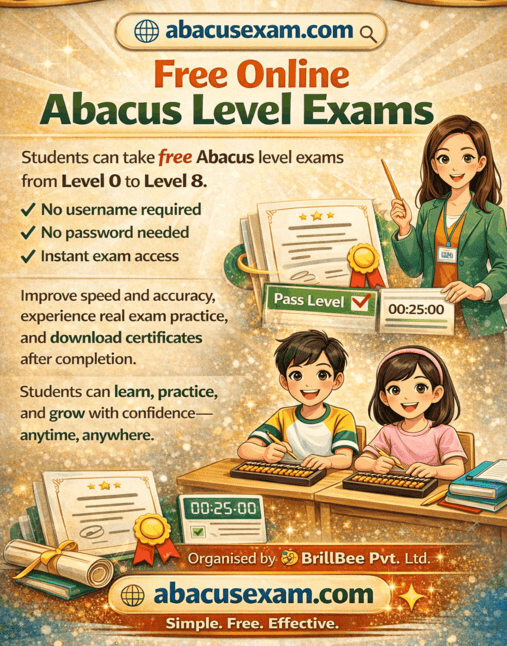
Students who practice regularly, appear for level exams, and participate in competitions show faster improvement in speed, accuracy, and confidence. That consistent rhythm—whether with abacus or apps—is what truly drives progress. For families interested in understanding the structure of these assessments, understanding abacus exam duration and time management provides helpful clarity on what to expect.

What I’ve Noticed Watching Children Learn
Over the years, I’ve observed thousands of children begin their math journey. Some start with apps, some with abacus, some with both. Here’s what stands out.
The Concentration Difference
Children learning abacus develop remarkable concentration. Maybe it’s the silence required to visualize beads, or maybe it’s the focused repetition. Whatever the reason, I’ve seen restless seven-year-olds sit calmly for twenty minutes of mental calculation.
App learners often show different strengths—they’re quick to respond, good at navigating interfaces, comfortable with timed challenges. But their attention can be more fragmented, jumping between tasks and notifications.
Math Confidence Across Borders
Whether I’m talking to parents in Dubai, teachers in the UK, or homeschooling families in Australia, the theme is consistent: math confidence gaps worry everyone. Children who struggle with calculation often carry that anxiety into other subjects.
The beauty of abacus is how it builds confidence from the ground up. Success with small numbers leads to tackling bigger ones. Each mastered level, each successful exam—they add up to genuine belief in one’s abilities. Many parents ask whether these skills transfer to school work, and the evidence strongly suggests that abacus training can indeed help with school mathematics, particularly in building the mental flexibility needed for more advanced concepts.
Benefits for Everyone in the Learning Triangle
For Students
The most obvious benefit is computational fluency. But beyond that, children develop patience, focus, and the satisfaction of mastering something challenging. They learn that progress comes through consistent effort—a lesson that serves them well beyond math class.
For Parents
Watching your child discover that they’re capable of difficult things? That’s genuinely moving. And the time spent practicing together creates connection that screen-based activities rarely provide. Family support in abacus learning becomes its own reward.
For Teachers
When students arrive with strong mental math foundations, classroom teaching transforms. Instead of drilling basics, teachers can explore interesting problems. The class moves faster, digs deeper, and students feel capable.
For those interested in exploring comprehensive resources, the Abacus Exam platform offers structured materials suitable for learners across different countries and education systems.
Frequently Asked Questions
Can abacus really improve my child’s overall math performance?
Yes, but with realistic expectations. Abacus builds mental calculation speed and number sense, which supports school mathematics. It’s particularly helpful for arithmetic, mental math, and developing concentration. For advanced concepts like algebra or geometry, it provides a strong foundation rather than direct instruction.
Is it worth investing in abacus classes if we already use math apps?
That depends on your goals. If your child enjoys apps and is progressing well, you might not need formal classes. However, if you’re looking for deeper number sense, better concentration, and reduced screen time, abacus offers unique benefits that apps typically don’t provide.
How long does it take to see results with abacus training?
Most children show noticeable improvement in mental calculation within three to six months of consistent practice. However, the real transformation—where numbers become visual and intuitive—usually takes a year or more of regular work. Patience truly matters here.
What age is best to start abacus learning?
Based on what I’ve observed, ages four to seven are ideal for introducing the physical abacus. By eight or nine, children can transition smoothly to mental abacus. That said, older children and even adults can learn successfully—it just requires more conscious effort.
Won’t my child become dependent on the abacus and never learn mental math?
This is a common concern, but well-structured programs gradually reduce physical dependence. Children start with the actual abacus, then practice with a visualized one, and eventually perform calculations without any tool. The abacus becomes an internal resource, not a crutch.
How do I choose between different abacus programs?
Look for programs that offer clear progression, qualified instructors (if opting for classes), and opportunities for assessment. The structure of levels and exams matters because it gives children tangible goals. Also consider whether the program provides materials for home practice—parental involvement makes a significant difference.
A Gentle Way Forward
If you’re still weighing abacus vs. mental math apps, here’s my honest advice: don’t feel pressured to choose perfectly. What matters most is that your child engages with numbers consistently and positively.
Maybe you start with an app to spark interest, then introduce abacus when they’re ready for something more hands-on. Maybe you find a hybrid program that blends both approaches. Maybe you discover that your child thrives with traditional abacus and you run with that.
The right path is the one your child will walk willingly.
What I’ve learned after all these years is that children rise to the level of our expectations and support. When we show up—whether with beads or tablets—and believe in their ability, they surprise us. They learn faster than we expect. They grow more confident than we imagine. And somewhere along the way, they discover that math isn’t something to fear. It’s something to play with.
So take a breath. Trust yourself. And know that whatever path you choose, your presence in their learning journey matters more than any tool ever could.
Warmly,
Ashwani Sharma 😊