🏫 Why Do Top Schools in the UK and Canada Integrate Abacus into Math Curricula?
Quickly jump to any section 👇
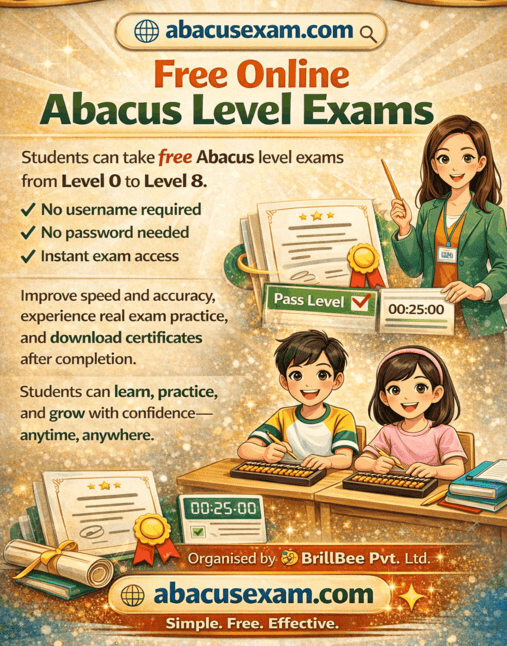
Students who want to improve their calculation speed and accuracy can also do regular practice. You can try abacus practice, abacus exams, and 1-minute mental math challenges here: Practice on Brillbee Academy
🌟 Introduction: The Global Shift in Math Education
Walk into a top primary school in London or Toronto today, and you might see something unexpected: children using wooden abacus beads alongside tablets and smartboards. You might wonder: “Why do top schools in the UK and Canada integrate abacus into math curricula?”
It’s not nostalgia. It’s strategy. Leading educators in these countries aren’t reaching for the past — they’re investing in proven cognitive science. In this guide, we’ll explore the research, policies, and real classroom results driving this global trend — and what it means for your child’s math journey.
🤔 Why This Question Matters to Parents
Many parents assume abacus is an “Asian-only” method or outdated tool. When they see it in Western school curricula, confusion follows:
- “Is this just a cultural import, or is there real educational value?”
- “Will abacus help my child meet UK National Curriculum or Canadian provincial standards?”
- “Should I seek schools that offer abacus, or is it optional enrichment?”
Understanding the why behind this integration helps you make informed decisions about your child’s education — whether you’re in Manchester, Vancouver, or considering international schooling options.
🧠 The Core Reason: Cognitive Science Meets Curriculum Standards
Top schools in the UK and Canada integrate abacus not because it’s trendy — but because it delivers measurable results aligned with their educational frameworks:
Research from institutions like the University of Oxford and University of Toronto shows that abacus training:
- ✅ Activates both brain hemispheres (logical left + visual right)
- ✅ Improves working memory by 30–40% in 6–12 month studies
- ✅ Reduces math anxiety through concrete-to-abstract progression
- ✅ Supports diverse learners, including EAL (English as Additional Language) students
UKCanada When policy meets proof, adoption follows.
📋 How Schools Implement Abacus: A Practical Breakdown
Integration isn’t random. Leading schools follow structured approaches:
- Curriculum Mapping (Term 1): Teachers align abacus lessons with existing math topics — e.g., place value in Year 2 (UK) or Grade 3 (Canada)
- Teacher Training (Ongoing): Staff receive certification in abacus pedagogy from accredited bodies like UCMAS or local education partners
- Blended Delivery: 15–20 minute abacus sessions 2–3x/week, integrated into regular math blocks — not as a separate “extra”
- Assessment Integration: Progress tracked through both traditional math tests and abacus-specific milestones (speed, accuracy, mental visualization)
- Parent Engagement: Workshops and take-home practice kits help families reinforce learning
- Review & Scale: Schools evaluate impact on math scores, confidence, and engagement before expanding to more year groups
This systematic approach ensures abacus enhances — not disrupts — core curriculum delivery.
👦 Real Schools, Real Results
Example 1: Maple Grove Primary, Ontario, Canada
Introduced abacus in Grade 2 math in 2022. After 18 months: 78% of students showed improved mental calculation speed; teachers reported higher engagement during word problem lessons. The program now extends to Grades 1–4.
Example 2: Riverside Academy, London, UK
Piloted abacus with Year 3 students struggling with number bonds. Within 6 months, 85% reached expected national standards — up from 52% pre-pilot. The school now trains staff across its multi-academy trust.
Example 3: International School of Dubai (UK Curriculum)
Uses abacus to support EAL learners. Visual bead manipulation helps children grasp math concepts before mastering English terminology — boosting both math confidence and language acquisition.
These aren’t outliers. They’re evidence-based decisions paying off in classrooms worldwide.
✨ Why This Integration Benefits Every Child
When schools thoughtfully integrate abacus, students gain multi-layered advantages:
- 🧠 Cognitive Boost: Enhanced memory, focus, and bilateral brain development
- 📊 Curriculum Alignment: Stronger grasp of place value, operations, and problem-solving — directly supporting national standards
- 🌍 Inclusive Learning: Visual-tactile approach supports diverse learners, including those with dyscalculia or language barriers
- ⚡ Confidence Builder: “I can do hard math!” mindset reduces anxiety and encourages risk-taking
- 🔗 Future-Ready Skills: Mental math agility supports coding, financial literacy, and STEM pathways later
Abacus isn’t about replacing calculators — it’s about building the brain that uses them wisely.
🔍 Deep Dive: Policy, Pedagogy, and Proof
Let’s unpack the three pillars driving abacus adoption in UK/Canada schools:
📜 Policy Alignment
Both UK and Canadian math curricula emphasize “conceptual understanding before procedural fluency.” Abacus provides the concrete foundation (beads) → pictorial (mental images) → abstract (symbols) progression that modern pedagogy recommends.
🎓 Teacher Empowerment
Schools invest in certified abacus trainer programs because teachers report: (1) clearer insight into student thinking, (2) new strategies for differentiation, and (3) renewed enthusiasm for teaching foundational math.
📈 Data-Driven Decisions
Leading schools track metrics beyond test scores: engagement time, error patterns, confidence surveys. Abacus programs consistently show positive trends across these holistic indicators.
🌐 Global Competitiveness
With international assessments like PISA highlighting math performance gaps, schools seek evidence-based tools that deliver results. Abacus offers a scalable, cost-effective intervention with global research backing.
The result? A quiet revolution in how young minds learn math — one bead at a time.
⭐ Expert Tips by Ashwani Sharma
Having trained educators in UK/Canada-aligned programs, here are my top tips for parents:
- 🎯 Ask the right questions: “How is abacus linked to my child’s current math topics?” shows you value curriculum integration.
- 🤝 Partner with teachers: Share observations from home practice — educators appreciate engaged parents.
- 📱 Balance tools: Encourage abacus practice alongside digital math apps — both have value when used intentionally.
- 🌍 Think long-term: Abacus skills support future learning in algebra, coding, and data literacy — not just early arithmetic.
- 🎉 Celebrate process: Praise effort (“You visualized that problem well!”) over speed to build growth mindset.
- 🔄 Stay consistent: Even 10 minutes of daily practice at home amplifies school-based learning.
- 🔍 Verify quality: If your school offers abacus, ask about trainer certification and curriculum alignment — quality matters.
✅ Do’s and ❌ Don’ts in School-Based Abacus Learning
- Support school abacus initiatives with positive reinforcement at home
- Ask teachers for simple practice activities that align with class lessons
- Focus on understanding over speed in early stages
- Share your child’s “aha!” moments with educators
- Attend parent workshops to learn the method yourself
- Compare your child’s abacus progress with peers publicly
- Push for advanced topics before foundational skills are solid
- Assume abacus replaces other math tools — it complements them
- Ignore signs of frustration — communicate with teachers early
- Discontinue practice during holidays — short, fun sessions maintain momentum
📈 What Results Can You Expect?
❌ Common Mistakes in School Abacus Programs
When abacus isn’t linked to core curriculum topics, impact diminishes. Alignment is key.
Well-meaning teachers without abacus pedagogy training may underutilize the tool’s potential.
Accuracy and understanding must come before timed challenges — especially in diverse classrooms.
Families reinforce learning best when they understand the method and goals.
Children progress at different rates. Flexible grouping and differentiated practice yield better outcomes.
In multicultural classrooms, framing abacus as a “global math tool” (not just “Asian method”) fosters inclusion.
• Science-Backed Benefits of Abacus Training
• Abacus and the UK National Curriculum: A Parent’s Guide
• 5 Mental Math Strategies Taught in Top Schools
❓ Frequently Asked Questions
🎯 Summary: The Smart Choice Behind the Beads
So, why do top schools in the UK and Canada integrate abacus into math curricula?
Because evidence meets excellence:
✅ Research-Backed: Cognitive science confirms abacus boosts memory, focus, and math reasoning
✅ Curriculum-Aligned: Supports national standards for fluency, reasoning, and problem-solving
✅ Inclusive: Visual-tactile method helps diverse learners thrive
✅ Future-Focused: Builds mental agility for STEM, coding, and lifelong learning
✅ Teacher-Empowering: Gives educators new tools to differentiate and engage
Abacus in UK/Canada schools isn’t about tradition — it’s about transformation. When children manipulate beads, they’re not just calculating — they’re building brains ready for tomorrow’s challenges.
If your child’s school offers abacus, embrace it. If not, advocate for it. Because every child deserves the cognitive advantage that comes from learning math the smart way.
Start Abacus Training Today
📞 Call/WhatsApp: +91 96641 11853
✨ Curriculum-aligned programs • Certified trainers • UK/Canada-friendly learning paths
© 2026 abacusexam.com | Empowering Young Minds Through Abacus Education
🌍 Serving Students in India, USA, UK, Canada, Australia, UAE & Worldwide