🔄 Japanese Soroban vs Chinese Abacus: Which is Better for Kids?
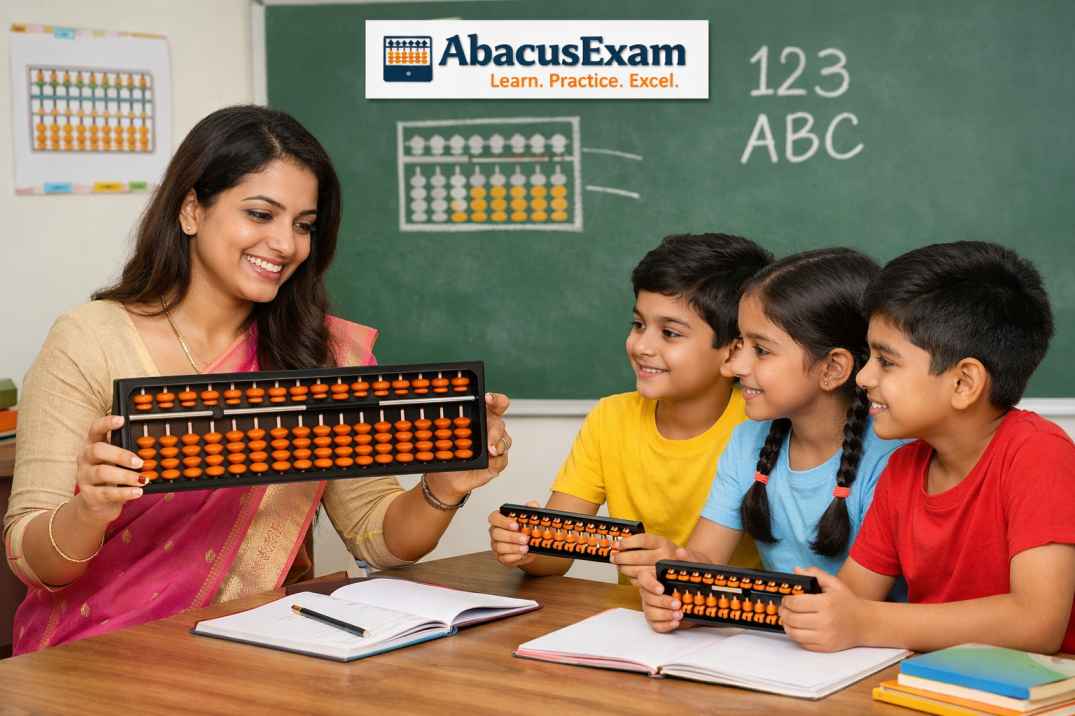
One bead configuration difference, big impact on learning
🤔 You’ve seen different abacus designs – some with 2 beads on top, some with 1. Which one is right for your child?
Many parents don’t realize there are two main types: the Japanese Soroban (1 upper bead) and the Chinese Suanpan (2 upper beads). The difference affects how children learn.
In this guide, I’ll explain the history, design, and which one is better for modern mental math training.
🇯🇵 Japanese Soroban – Design and Advantages
The Soroban has one bead in the upper deck (value 5) and four beads in the lower deck (each value 1). This 1:4 ratio is optimized for decimal (base-10) arithmetic – exactly what children learn in school.
Advantages: Fewer beads mean faster finger movement. The simplified design makes mental visualization easier. Most importantly, the Soroban is the standard for all modern abacus mental math programs worldwide.
I’ve trained thousands of children on Soroban-style abacuses. They pick it up quickly and transition to mental math smoothly.
🇨🇳 Chinese Suanpan – History and Why It’s Less Common
The Chinese abacus has 2 upper beads (each value 5) and 5 lower beads (each value 1) – a 2:5 ratio. This design was used historically for calculations in base-16 (e.g., traditional Chinese weights and measures).
For modern decimal math, the extra beads are unnecessary and actually slow down calculation. The Suanpan is larger and heavier. Children often confuse the two upper beads.
Today, the Suanpan is mainly used for cultural demonstrations or by enthusiasts. Almost no mental math program teaches it.
📊 Side-by-Side Comparison Table
| Feature | Japanese Soroban | Chinese Suanpan |
|---|---|---|
| Upper beads | 1 (value 5) | 2 (each value 5) |
| Lower beads | 4 (each value 1) | 5 (each value 1) |
| Max per rod | 9 (1×5 + 4×1) | 15 (2×5 + 5×1) |
| Best for | Decimal arithmetic, mental math | Hexadecimal, historical use |
| Learning curve | Gentle, intuitive | Steeper, more beads to track |
| Used in modern programs | Yes (UCMAS, SIP, Aloha, etc.) | No |
🎯 Which One Should Your Child Use?
For 99% of children, the Japanese Soroban is the right choice. It’s the industry standard. All reputable abacus training centers use Soroban-style abacuses.
If a center uses a Chinese abacus, that’s a red flag – they may be using outdated or non-standard equipment. Always ask before enrolling.
For home practice, buy a Soroban with 13 rods (sufficient for all levels). Avoid cheap plastic toys with loose beads – they hinder proper finger technique.
💪 Not sure which abacus kit to buy? We provide the right Soroban with our courses.
🎯 Get a free kit consultation →❓ Frequently Asked Questions
Is the Chinese abacus completely useless?
Not useless – it has historical and cultural value. But for teaching children mental math, the Soroban is far superior.
Can a child switch from Chinese to Japanese abacus?
Yes, but there will be a short adjustment period (2-3 weeks) to get used to fewer beads.
Why do some older books show the Chinese abacus?
Before the 20th century, the Chinese abacus was common. Japan refined it into the Soroban around the 1930s.
Which abacus do you use in your classes?
We use standard Japanese Soroban with 13 rods – high-quality plastic or wood.
Does the abacus color matter?
No, but bright colors may distract younger children. Traditional white or light-colored beads on a dark frame are best.
💛 Give your child the right tool for success. Start with a Soroban and proper guidance.
I’ve trained thousands of children using the Soroban method. Let me show you why it works.
📲 Book a free demo →