🔍 How to Find a Good Abacus Teacher or Center Near Me
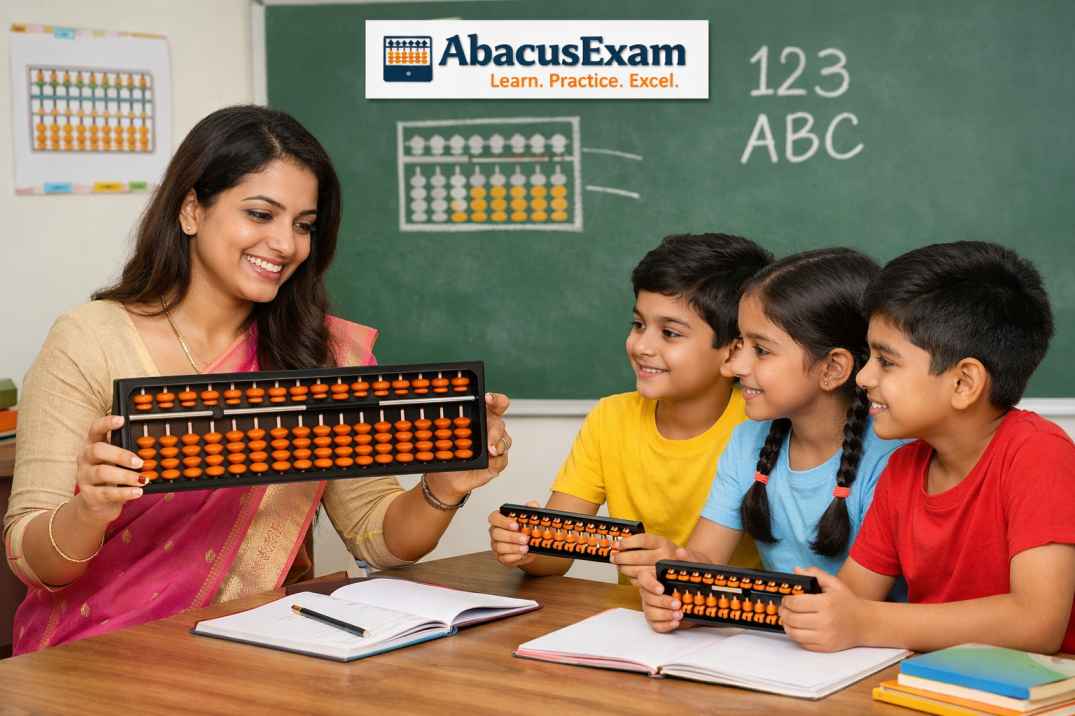
The right teacher makes all the difference
🤔 You’ve decided to enroll your child in abacus training. But how do you find a good teacher? What qualifications matter?
I’ve seen parents make expensive mistakes – choosing the cheapest center, or the one closest to home, only to find the teacher has no real training.
In this guide, I’ll give you a clear checklist to find a qualified, experienced abacus instructor – whether online or in-person.
📜 Key Qualifications – Certification, Experience, Technique
Certification: A good teacher should have completed formal abacus teacher training (typically 40-100 hours). Ask to see their certificate. Recognized programs include UCMAS, SIP, Aloha, or independent accredited courses.
Experience: At least 2-3 years of teaching experience. New teachers may be fine, but ask about their training. I’ve seen fresh graduates who can’t correct finger technique.
Technique demonstration: Ask the teacher to show you the correct finger movement (thumb for lower beads, index for upper). If they use all fingers, walk away.
Curriculum structure: A good center has clear levels (usually 8-10), regular assessments, and certification exams. Avoid centers with “flexible” or vague progression.

❓ 10 Questions to Ask Before Enrolling
1. How long have you been teaching abacus? (Look for 2+ years)
2. Can I see your teacher training certificate?
3. What is your student-to-teacher ratio? (Ideal: 6-8 students per teacher)
4. Do you provide a free trial class? (Good centers always do)
5. What is your level progression and exam schedule?
6. How do you correct finger technique errors? (Ask for a demo)
7. What happens if my child misses a class? (Make-up policy)
8. Can I speak to a current parent as a reference?
9. What is the total cost (including kit, exam fees, registration)?
10. Do you have a refund or satisfaction guarantee policy?
🚩 Red Flags – Signs of a Bad Teacher
Promises “mental math in 2 months” – Realistic timeline is 6-12 months for basic mental math.
Cannot demonstrate correct finger technique – Dealbreaker.
No structured curriculum or exams – You won’t know progress.
Very low fees (e.g., ₹500/month) – Usually means unqualified teacher.
Refuses a trial class – Hiding something.
No parent references or online reviews – Risky.
💻 Finding a Good Online Teacher vs Local Center
Local center pros: In-person correction, social interaction, structured environment.
Local center cons: Commute time, higher cost, limited to local teachers.
Online pros: Wider selection of qualified teachers, often lower cost, no commute, recorded sessions.
Online cons: Requires parent supervision for young kids, possible internet issues.
For online, ask for a live demo where the teacher watches your child’s hand movements. A good online teacher uses a second camera or asks you to position the camera correctly.
💪 Not sure where to start? We offer qualified, certified teachers online – try a free demo.
🎯 Book a free demo →❓ Frequently Asked Questions
Is online abacus as good as in-person?
Yes, with a skilled teacher who can correct technique via camera. Many parents prefer online for convenience.
What is the average cost of a good teacher?
In India: ₹1000-2000/month. US/UK: $40-80/month for online. Higher for in-person.
Can a parent without abacus knowledge judge a teacher?
Use our checklist. Also, observe if the child is engaged and understands after the demo.
What if my child doesn’t like the teacher after a few classes?
Good centers allow teacher changes or refunds within a trial period. Ask upfront.
Do you offer teacher training as well?
Yes, we train teachers. Visit missionabacus.in for certification courses.
💛 The right teacher unlocks your child’s potential. Don’t settle for less.
I’ve trained over 5000 students and hundreds of teachers. Let me help you find the right fit – or try a demo with our certified team.
📲 Get a free consultation →