How Often Should a Child Appear for Abacus Exams? 🧮🎓

Welcome! I’m Ashwani Sharma, Director at Mission Abacus Private Limited. Over the years, I’ve guided countless children, parents, and teachers through the exciting world of abacus learning. One question I hear very often is: “How often should a child appear for abacus exams?”
In this blog, we’ll explore this question thoroughly, considering not only academic readiness but also confidence, focus, and long-term growth. Whether you are a parent helping your child set learning goals, a teacher planning class progress, or an international student navigating exams across different systems, this guide will provide practical, experience-based insights.
By the end, you’ll understand the best pace for abacus exams, why timing matters, and how exams fit into a broader learning journey that builds mental math skills, logical thinking, and confidence worldwide.
📘 Table of Contents
- Why Abacus Exams Matter
- Factors Influencing Exam Frequency
- Age and Learning Stage
- Practice Consistency
- Learning Environment
- Recommended Frequency for Different Levels
- Benefits of Regular Exam Participation
- For Students
- For Parents
- For Teachers
- Signs a Child Is Ready for the Next Exam
- How to Avoid Exam Burnout
- Integrating Exams with Daily Practice
- Online Learning and Global Adaptation 🌍
- When Abacus May Not Be Enough ⚖️
- Practical Tips Based on Classroom Experience
- Role of the All-in-One Abacus Learning System
- Reflective Question for Parents & Teachers ✍️
- Free Abacus Teacher Training – A Gentle Note
- Frequently Asked Questions (FAQs)
- Closing Thoughts
Why Abacus Exams Matter 📝
Abacus exams are more than assessments—they are milestones in a child’s mental math journey.

- They provide structured goals for practice.
- They help track speed, accuracy, and logical thinking.
- They offer opportunities for children to experience healthy challenge and achievement.
In my experience working with students and teachers, children who appear for level exams consistently show faster improvement in focus and confidence. Exams make learning tangible and purposeful, rather than just a routine activity.
Factors Influencing Exam Frequency 💡
Age and Learning Stage
Younger children may require more time between exams to consolidate concepts, while older students with better concentration can handle shorter intervals.
- Ages 5–7: 3–4 months between exams
- Ages 8–10: 2–3 months
- Ages 11 and above: 1–2 months, depending on speed and accuracy
The key is to balance readiness with motivation.
Practice Consistency
Consistency is the backbone of abacus learning. A child practicing 15–30 minutes daily is more likely to succeed in shorter exam intervals than a child with sporadic practice.
“Students who practice regularly, appear for level exams, and participate in competitions show faster improvement in speed, accuracy, and confidence.”
Learning Environment
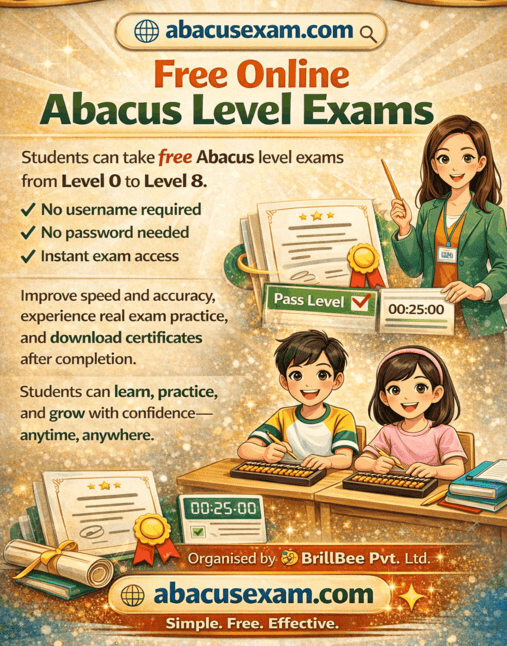
Supportive teachers and parents, along with access to resources like https://abacusexam.com for level exams, can help children progress at a steady pace. The home or classroom environment should encourage practice without pressure.
Recommended Frequency for Different Levels 🎓

Based on years of classroom experience, a practical guide is:
- Beginner Levels (1–3): Every 3–4 months
- Intermediate Levels (4–6): Every 2–3 months
- Advanced Levels (7–10): Every 1–2 months
This schedule ensures skill consolidation, confidence building, and steady progress.
Benefits of Regular Exam Participation 🌟
For Students
- Encourages goal-setting and self-motivation
- Builds mental calculation speed and accuracy
- Provides feedback for improvement
For Parents
- Offers clear checkpoints to observe progress
- Helps understand where extra support may be needed
- Strengthens parent-child communication about learning
For Teachers
- Facilitates structured lesson planning
- Enables targeted interventions for students who struggle
- Allows comparison across classes and international benchmarks
Signs a Child Is Ready for the Next Exam ✅
Before scheduling an exam, look for these signs:
- Confidence in Current Level: Child completes practice sets without hesitation
- Consistent Accuracy: Few mistakes and strong bead visualization
- Speed Improvement: Gradual progress in calculation speed
- Positive Mindset: Excited to take on new challenges rather than anxious
Children showing these signs are more likely to enjoy exams and gain long-term benefits.
How to Avoid Exam Burnout ⚖️
Too frequent exams can cause stress and reduce motivation. Here’s how to prevent burnout:
- Maintain short daily practice sessions instead of long marathons
- Celebrate effort, not just scores
- Include playful mental math activities from platforms like https://abacuswala.com
Balancing challenge and fun keeps learning sustainable and enjoyable.
Integrating Exams with Daily Practice 📘
Exams should be part of a larger learning ecosystem, not isolated events:
- Practice with real abacus beads and mental exercises
- Track progress using audio challenges and 100-level exercises
- Link classroom and home practice to exam preparation
This integration helps children transition smoothly from learning to assessment.

Online Learning and Global Adaptation 🌍
International students face unique challenges: screen fatigue, time zones, and remote instruction.
- Short, frequent online sessions combined with hands-on bead practice balance engagement.
- Digital platforms like https://abacusshiksha.com and https://abacusexam.com support remote exam scheduling.
- Regular exams reinforce structure and accountability, even across continents.
Abacus exams prepare students not only for schoolwork but also for lifelong focus, resilience, and mental agility.
When Abacus May Not Be Enough ⚖️
While abacus exams and training provide immense benefits, it’s important to stay realistic:
- Exams alone cannot replace conceptual understanding in maths or other subjects.
- Children require holistic learning experiences, including reading, problem-solving, and creative thinking.
- Overemphasis on frequency without comprehension may reduce motivation and enjoyment.
Balanced guidance is essential.
Practical Tips Based on Classroom Experience ✍️
From my years of working with international students:
- Observe individual pace: Not all children progress at the same speed
- Encourage consistent practice: 15–30 minutes daily is ideal
- Use milestones for motivation: Small rewards and recognition work wonders
- Incorporate competitions: Platforms like https://abacusshiksha.com motivate and inspire
- Monitor stress levels: Ensure exams remain positive learning experiences
Role of the All-in-One Abacus Learning System 🧩
A structured system combines:
- Competitions: https://abacusshiksha.com
- Level Exams: https://abacusexam.com
- Audio & Mental Practice: https://abacuswala.com
Together, these resources provide a complete, engaging, and globally relevant learning journey.

Reflective Question for Parents & Teachers ✍️
Are we setting exam schedules based on children’s readiness and growth, or solely on calendar timelines?
Long-term success depends on pacing exams to support learning, confidence, and motivation.
Free Abacus Teacher Training – A Gentle Note 🎓
For teachers and parents seeking deeper guidance, free abacus teacher training can provide strategies to schedule exams wisely, balance practice, and support children’s growth. Mission Abacus Private Limited has trained educators worldwide, fostering skills that last a lifetime.
Frequently Asked Questions (FAQs)
How often should a child appear for abacus exams?
It depends on age, level, and practice consistency. Typically, beginners: 3–4 months, intermediate: 2–3 months, advanced: 1–2 months.
Can exams improve confidence and speed?
Yes. Regular exams give children clear goals and encourage faster mental calculation, enhancing confidence.
Is it necessary for every child to take exams?
Not strictly, but exams provide milestones, motivation, and structured feedback for long-term learning.
Can online students appear for international exams?
Absolutely. Digital platforms like https://abacusexam.com and competitions support remote participation.
How can parents track progress without pressure?
Focus on effort, consistency, and improvement rather than just scores. Celebrate achievements and small milestones.
Is frequent testing stressful for children?
Too frequent exams may cause stress. Balanced scheduling based on readiness ensures exams are motivating, not overwhelming.
Closing Thoughts 🌱
Over years of mentoring children globally, I’ve seen that well-timed abacus exams play a crucial role in developing speed, accuracy, focus, and logical thinking. But the key lies in balance: readiness, consistent practice, and supportive guidance matter more than calendar dates.
By observing progress, encouraging effort, and integrating exams into a comprehensive learning journey, children gain confidence and skills that last a lifetime.
— Ashwani Sharma