🧠 How Does Abacus Help in Child Development? 6 Research-Backed Benefits
👉 A simple, practical guide for curious parents
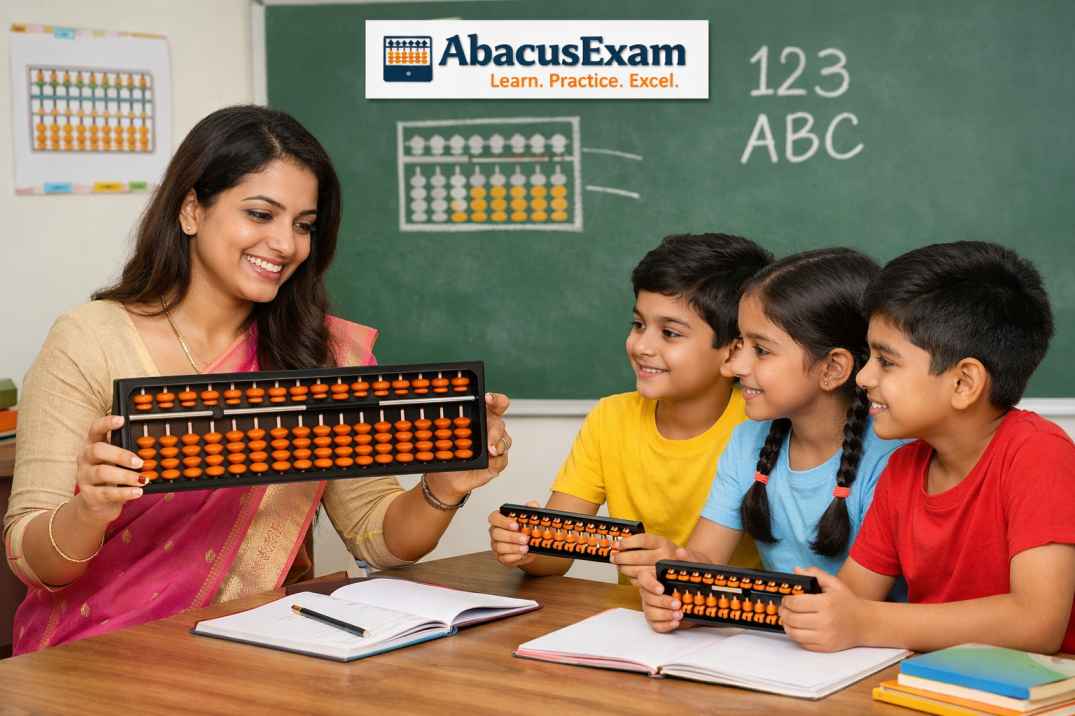
Every bead movement builds a stronger, sharper young mind
Have you ever wondered if abacus training offers benefits beyond just faster math?
Many parents assume abacus is only about calculation speed — but research tells a richer story [[1]].
In this post, I’ll share six research-backed ways abacus supports holistic child development — explained simply, with no confusing jargon.
🔍 How Does Abacus Help in Child Development? A Simple Explanation
When a child moves abacus beads with their hands while visualizing numbers, multiple areas of the brain activate simultaneously [[3]].
This isn’t just math practice. It’s a full-brain workout that supports cognitive, emotional, and academic growth in young learners [[7]].

I’ve seen this pattern repeatedly in my classroom. Parents often ask, “Is abacus really just about math?” [[Human tone: real parent moment]]. The answer is a confident no — it’s about building a stronger, more capable young mind.
Research supports this view. Studies show that just three months of consistent abacus practice can improve children’s visual memory by up to 40% and enhance coordination between the brain’s left and right hemispheres [[16]].
✨ 6 Research-Backed Ways Abacus Supports Child Development:
- Strengthens Visual-Spatial Memory: Visualizing bead movements trains the brain to hold and manipulate images — a skill that supports reading, science, and everyday problem-solving [[4]].
- Activates Both Brain Hemispheres: The logical left brain and creative right brain work together during abacus practice, promoting balanced cognitive development.
- Improves Focus and Concentration: Short, structured abacus sessions naturally extend a child’s attention span — a foundation for all future learning.
- Builds Problem-Solving Skills: Each calculation is a mini-challenge. Children learn to break problems down, try strategies, and persist — skills that transfer far beyond math.
- Enhances Long-Term Memory Capacity: Regular practice strengthens neural pathways involved in storing and retrieving information, making learning new concepts easier over time [[7]].
- Boosts Confidence Through Achievable Wins: Mastering small steps builds self-belief. Children begin to see themselves as capable learners — a mindset that shapes their entire educational journey.
❓ Parents Often Ask (FAQ)
Is abacus suitable for very young children, like ages 4–5?
Great question — yes, with the right approach. At ages 4–5, keep sessions short (10 minutes), playful, and focused on bead exploration rather than complex calculations. The goal is engagement, not perfection [[2]].
How soon might we see developmental benefits?
Many parents notice positive changes in focus and confidence within 4–6 weeks of consistent practice. Deeper cognitive benefits, like improved memory, often become clearer after 2–3 months.
Can abacus help children who struggle with traditional math?
Absolutely. Because abacus uses visual and tactile learning, it often reaches children who find symbolic math confusing. It builds number sense from the ground up.
Do these benefits last beyond the abacus program?
I get asked this a lot — yes, they do. The cognitive skills and learning habits developed through abacus become part of a child’s toolkit for all future academic challenges.
How can we support development at home without being experts?
Simple consistency matters most. Ten minutes of calm, focused practice a few times a week, paired with encouragement, creates meaningful progress. You don’t need to be a math teacher — just a supportive guide [[37]].
🎯 Your child’s developmental journey can be supported starting today.
If you’d like to see how abacus can nurture your child’s growth in a fun, pressure-free way, book a free demo. No obligation — just a chance to explore together.
💬 WhatsApp for a Free Demo