How Abacus Improves Mental Visualization

Welcome! I’m Ashwani Sharma, Director at Mission Abacus Private Limited in Jaipur, India. Over the years, I’ve spent countless hours guiding students and teachers through the world of abacus learning, and one thing that always stands out is how abacus improves mental visualization. It’s fascinating to see how this simple tool sharpens the mind’s eye, helping learners picture numbers and calculations effortlessly. In this blog, I’ll share some practical insights based on my experience, so you can understand why it’s such a game-changer for kids and even adults.
Whether you’re a parent wondering about better ways to boost your child’s math skills, a teacher looking for fresh classroom ideas, or just someone curious about mental math from places like India, the UK, US, Canada, Australia, New Zealand, Czechia, UAE, Qatar, or Norway, this is for you. Let’s dive in with a friendly chat about how abacus can make a real difference.
Table of Contents
- What is Abacus and Mental Visualization?
- The Basics of Abacus
- Understanding Mental Visualization
- How Abacus Training Builds Visualization Skills
- The Step-by-Step Process
- Real-Life Examples from the Classroom
- Key Benefits for Students
- Advantages for Parents and Teachers
- Practical Tips to Get Started with Abacus
- When Abacus May Not Be Enough
- Integrating Abacus with Modern Learning
- FAQs
What is Abacus and Mental Visualization?
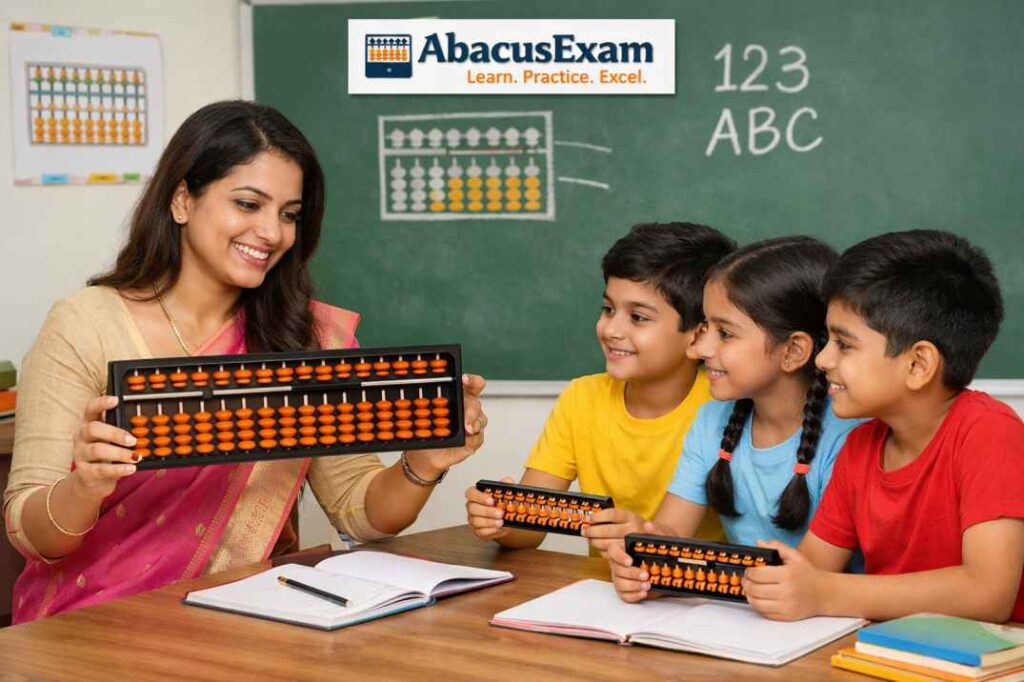
Let’s start from the ground up. If you’re new to this, don’t worry—I’ll keep it straightforward. Abacus is an ancient counting tool, but in modern education, it’s a fantastic way to teach math through hands-on practice. It’s not just about sliding beads; it’s about training the brain to see and manipulate numbers mentally.
Over the years, I’ve noticed how abacus helps learners from all walks of life build a stronger inner picture of math problems. This is where mental visualization comes in—it’s that ability to “see” calculations in your head without paper or a calculator.
Think of it like this: When you close your eyes and imagine a friend’s face, that’s visualization. Apply that to numbers, and you’ve got the core of what abacus builds.
The Basics of Abacus
An abacus is a frame with rods and beads. Each bead represents a value—ones, tens, hundreds, and so on. You move them to add, subtract, multiply, or divide.
For beginners, it feels like play. Kids start by physically touching the beads, which makes abstract numbers feel real. As they progress, they learn to do it all in their minds.
In my experience working with students and teachers across different countries, this tactile start is key. It grounds the learning, especially for young ones who struggle with screen-based math apps.
Understanding Mental Visualization
Mental visualization is the brain’s way of creating images to solve problems. In math, it means picturing numbers, shapes, or steps without external aids.
Abacus boosts this by linking physical actions to mental images. Over time, learners “see” the abacus in their heads, making calculations faster and more accurate.
It’s not magic—it’s practice. And it’s useful everywhere, from school tests in the US to everyday budgeting in Australia.
How Abacus Training Builds Visualization Skills

Now, let’s get into the heart of it: how abacus improves mental visualization step by step. It’s a gradual build-up, like learning to ride a bike—first with training wheels, then without.
Based on real classroom learning, I’ve seen shy kids turn into confident calculators. The process engages both sides of the brain, blending logic with creativity.
It starts simple and grows complex, ensuring everyone can follow along, no matter their starting point.
The Step-by-Step Process
First, learners master the physical abacus. They add and subtract by moving beads, building muscle memory.
Next, they visualize the movements without touching it. Teachers guide them to “imagine” the beads shifting.
Finally, full mental abacus: All calculations happen in the head, with vivid mental images. This sharpens focus and speed.
Students who practice regularly, appear for level exams, and participate in competitions show faster improvement in speed, accuracy, and confidence.
Real-Life Examples from the Classroom
Picture a 7-year-old in one of my sessions, fumbling at first. After a few weeks, she’s adding three-digit numbers mentally, her eyes lighting up with pride.
Or a teacher from Canada I mentored online—she used abacus to help her class overcome math anxiety. They visualized problems during story time, making lessons fun.
These aren’t rare; they’re common when practice is consistent. It’s rewarding to see that spark of understanding.
Have you ever tried visualizing a math problem? If not, think about it—how might it change your approach to numbers? 💡
Key Benefits for Students
For students, the gains go beyond math. Abacus improves mental visualization, leading to better concentration in all subjects.
Kids gain confidence, tackling challenges without fear. It’s especially helpful for those with learning differences, offering a visual lifeline.
Internationally, from UK schools to UAE homes, it fosters independence. Learners carry this skill lifelong, aiding careers in engineering or finance.
Advantages for Parents and Teachers
Parents, you’ll love seeing your child’s excitement grow. Abacus reduces homework battles, as kids visualize solutions quicker.
Teachers, it adds variety to lessons, combating screen fatigue in online classes. It’s adaptable for group or solo learning.
In my years guiding educators, I’ve seen it build stronger parent-teacher bonds, with shared progress stories.
Practical Tips to Get Started with Abacus
Ready to try? Start small: Get a basic abacus and follow simple tutorials.
Practice 10-15 minutes daily. For kids, make it game-like—time challenges or rewards.
Use resources like our All-in-One Abacus Learning System, including the Abacus Competition Platform, Abacus Level Exam Platform, and Abacus Audio Practice & 100-Level Challenge. They’re great for structured progress.
Wondering about exam timings? Check these abacus exam duration & time management tips for guidance.
And if school math is a concern, abacus complements it well—explore how abacus can help in school maths.
For teachers interested, consider free abacus teacher training—it’s a gentle way to build skills without pressure. 🚀
Set realistic expectations: Progress varies, but consistency pays off.
When Abacus May Not Be Enough
Let’s be honest—abacus isn’t a cure-all. For advanced math like algebra, it supports but doesn’t replace traditional methods.
Some kids with severe attention issues might need extra therapies alongside. Adults restarting learning could find it slower if motivation dips.
In my experience, it’s most effective when combined with other tools. Understand these limitations to avoid frustration—it’s about balance.
Integrating Abacus with Modern Learning

In today’s world of online education, abacus fits right in. Use apps for virtual practice, blending old and new.
It tackles challenges like confidence in maths or lifelong learning pursuits. For global families, it’s portable and culture-neutral.
Teachers in Norway or New Zealand adapt it for hybrid classes, keeping engagement high.
Over the years, I’ve noticed it helps with screen fatigue by offering a break from devices—back to basics, yet powerful.
Share this with friends or on social media if it resonates; buttons below make it easy. 🌍
FAQs
Can abacus really improve mental visualization for beginners?
Absolutely. It starts with basics, building up to mental images. Beginners see results in weeks with daily practice. It’s reassuring for parents watching their kids gain confidence step by step.
How long does it take to see improvements in mental visualization with abacus?
Typically 2-3 months for noticeable changes, but it depends on consistency. In my sessions, regular practicers speed up faster. Be patient—it’s a skill that grows over time.
Is abacus worth learning for adults interested in mental math?
Yes, especially for sharpening focus. Adults often use it for work or hobbies. It’s never too late; I’ve guided many who rediscover joy in numbers.
Can abacus help with school maths beyond visualization?
It does, by boosting speed and accuracy. Check resources on how abacus can help in school maths for details. It’s a supportive tool, not a replacement.
What if my child struggles with abacus at first?
That’s normal—start slow and encourage. Mix in fun elements like games. Over time, visualization clicks, turning struggles into strengths.
Is abacus suitable for international learners from different countries?
Definitely. It’s universal, with no language barriers. Families in the US, UK, or Qatar adapt it easily for home or school, fostering global math skills.
Thanks for reading! As Ashwani Sharma, I’ve loved sharing these insights from my journey at Mission Abacus Private Limited. Remember, learning is about growth, not perfection. Keep exploring, and you’ll see the magic unfold. 🎓 🧮