How Abacus Exams Help in School Mathematics
Welcome! I’m Ashwani Sharma, Director at Mission Abacus Private Limited. Over the years, working with students and teachers around the world, I’ve noticed that many parents wonder how abacus exams actually tie into their child’s school mathematics performance. In this blog, we’ll explore how abacus exams help in school mathematics, sharing practical insights, real classroom observations, and tips for both parents and teachers. Whether your child is learning in India, the UK, the US, or anywhere else, these strategies are universally relevant.
Table of Contents
- Understanding Abacus Exams
- Connection Between Abacus and School Maths
- Benefits of Regular Abacus Exams
- Practical Tips for Integrating Abacus Learning with School Maths
- When Abacus May Not Be Enough
- Reflective Question for Parents and Teachers
- Conclusion
- FAQs
Understanding Abacus Exams
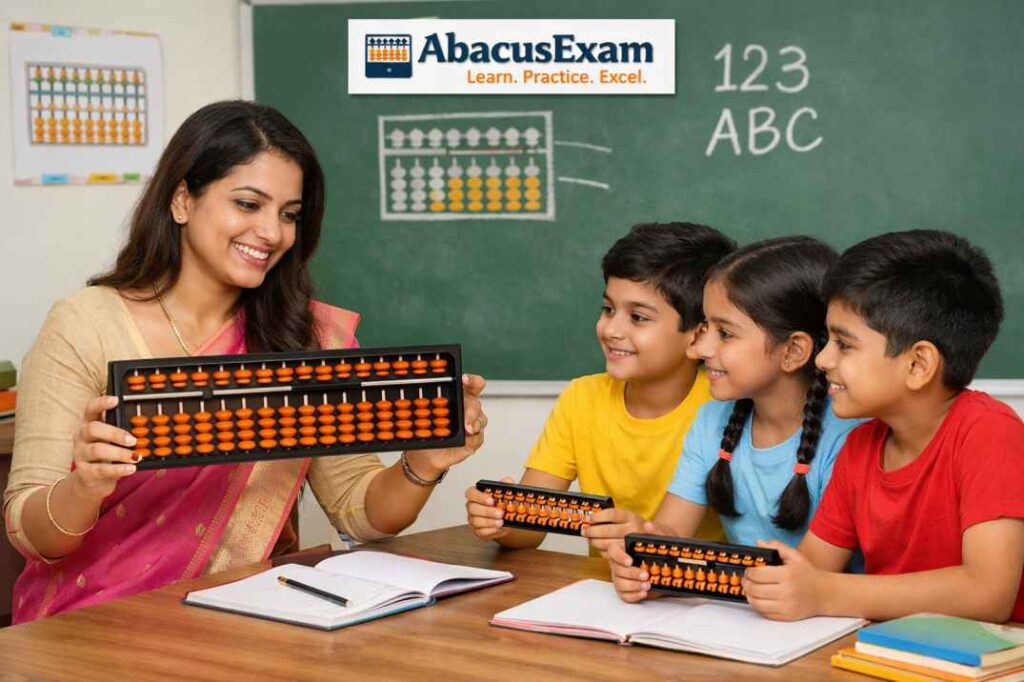
Abacus exams are structured assessments that test a student’s ability to perform calculations using the abacus, either physically or mentally. They range from beginner to advanced levels, and often include timed challenges in addition, subtraction, multiplication, division, and more complex operations.
In my experience working with students and teachers, I’ve seen how preparing for these exams encourages a disciplined learning approach, develops concentration, and builds confidence before a child even sits in their classroom for school math tests.
The exams also provide measurable milestones, allowing students, teachers, and parents to track progress, which is crucial in understanding areas that need improvement.
Connection Between Abacus and School Maths
Enhancing Mental Calculation Skills
One of the primary ways abacus exams help in school mathematics is by improving mental calculation abilities. Unlike conventional calculators, the abacus trains the brain to visualize numbers and perform operations mentally.
- Students practicing for abacus exams develop a strong number sense.
- They can quickly estimate sums, differences, or products in their school tests without hesitation.
Over the years, I’ve noticed students who regularly appear for abacus exams often solve complex word problems faster and with more confidence compared to peers who haven’t practiced abacus.
Boosting Accuracy and Speed
School exams are often timed, and errors in calculation can cost marks. Abacus exams teach students to balance speed with accuracy.
- Timed challenges in exams mimic the pressure of school assessments.
- Students learn to remain calm and focused, reducing careless mistakes.
Based on real classroom learning, children who take abacus exams also tend to improve their handwriting and number alignment skills, as accuracy is emphasized at every level.
Benefits of Regular Abacus Exams
For Students
- Confidence in Maths – Students feel prepared and capable when they encounter challenging questions.
- Structured Learning – Regular exams provide a roadmap for consistent practice.
- Recognition and Motivation – Passing levels and earning certificates encourage students to continue learning.
Trust Line: “Students who practice regularly, appear for level exams, and participate in competitions show faster improvement in speed, accuracy, and confidence.”
For Parents
- Progress Monitoring: Exams allow parents to see tangible results.
- Identifying Strengths and Weaknesses: They can support children where needed.
- Peace of Mind: Knowing their child is building mental math skills early on helps parents plan academic support.
For Teachers
- Benchmarking Performance: Teachers can track student improvement through exam results.
- Tailored Lesson Plans: Identifying problem areas helps in designing personalized learning strategies.
- Professional Growth: Instructors can use insights from exams to refine their teaching methods.

Practical Tips for Integrating Abacus Learning with School Maths
- Consistent Practice: Encourage daily abacus sessions of 20–30 minutes.
- Simulate Exam Conditions: Occasionally time students to get them comfortable with pressure.
- Connect Concepts: Relate abacus calculations to school topics like fractions, decimals, or word problems.
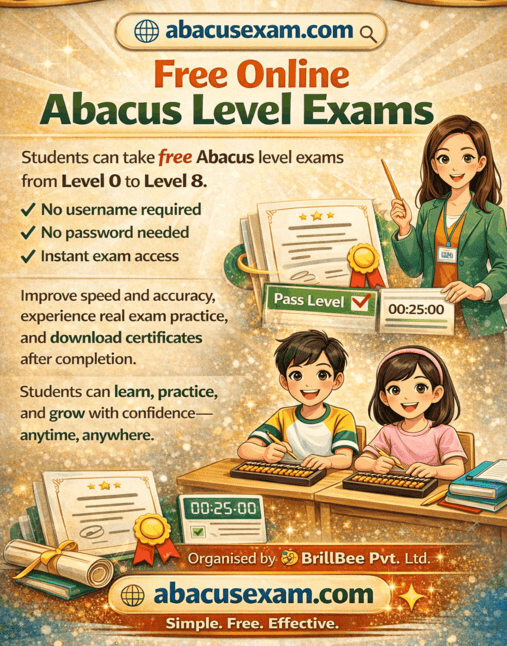
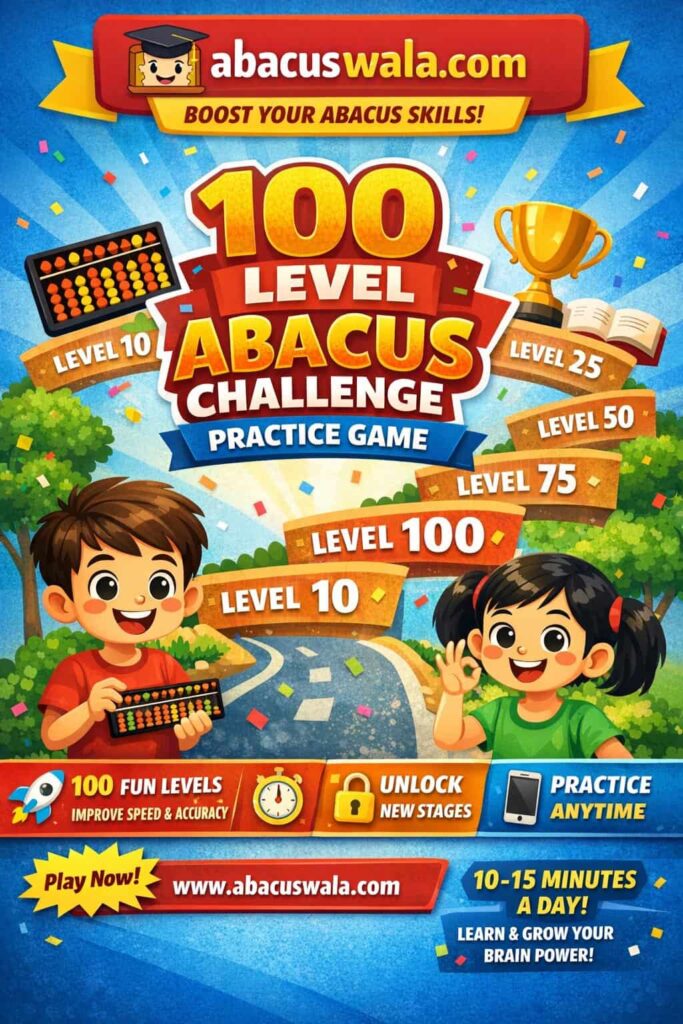
- Use All-in-One Abacus Learning System: Platforms like 🏅 Abacus Competition Platform, 📝 Abacus Level Exam Platform, and 🎧 Abacus Audio Practice & 100-Level Challenge provide a structured framework for practice and assessment.
- Encourage Reflection: Ask students to review mistakes and discuss strategies to avoid them in school tests.
For more tips on managing time during exams, you can explore abacus exam duration and time management tips, and to understand how abacus helps in regular classroom maths, refer to can abacus help in school maths.
When Abacus May Not Be Enough
While abacus exams provide numerous benefits, they are not a complete substitute for school learning.
- Abacus focuses mainly on calculation speed and accuracy.
- Some school topics, like geometry, statistics, or applied problem-solving, require additional practice outside of abacus.
- Parents and teachers should ensure balanced learning, combining abacus with regular homework and curriculum-based exercises.
By understanding these limitations, you can set realistic expectations and use abacus as a complementary tool rather than the sole method for school maths success.

Reflective Question for Parents and Teachers
Ask yourself: Are my students or children using abacus practice only as a fun activity, or are they actively applying it to enhance their school performance?
Reflecting on this helps integrate abacus more effectively into daily learning routines.
Conclusion
Abacus exams are more than just a test—they’re a pathway to building strong mathematical skills, confidence, and focus in students. By combining regular abacus practice with structured exams, students, parents, and teachers can see clear benefits in school mathematics.
As someone who has worked with students globally, I encourage parents and teachers to use exams thoughtfully and celebrate progress, not just perfection. The journey of learning with the abacus is about growth, confidence, and developing a lifelong love for numbers. 🚀
FAQs
1. Can abacus exams improve my child’s school maths scores?
Yes, abacus exams improve mental calculation speed, accuracy, and confidence, which can positively impact school maths performance.
2. How often should a child appear for abacus exams?
Frequency depends on the child’s learning pace. Typically, appearing every 3–6 months works well to track progress without adding stress.
3. Is abacus only for young children?
No, students of all ages can benefit. Older students can use advanced levels to enhance speed, memory, and problem-solving skills.
4. Can abacus help with maths anxiety?
Absolutely. Structured practice and regular exams build confidence and reduce fear of timed school assessments.
5. How long does it take to see improvements in school maths?
With consistent practice and regular exams, improvements are often noticeable within a few months, especially in calculation speed and accuracy.
6. Can teachers use abacus in classrooms outside India?
Yes, abacus methods are globally applicable and align well with international curricula, helping students in countries like the UK, US, Australia, and beyond.