Can Abacus Training Help Children with Math Anxiety?
If your child freezes during math tests or says “I hate math,” you’re not alone. Discover how abacus can gently reduce anxiety and build real confidence.
Quickly jump to any section 👇
Introduction
Math anxiety is real. Many bright children suddenly go blank when they see numbers. They sweat during tests, avoid homework, and even say “I’m just bad at math.” As a parent, watching your child struggle is heartbreaking.
The good news? Abacus training offers a gentle, effective solution. Instead of more pressure through worksheets, abacus turns math into a fun, visual game that builds confidence step by step.
So, the big question: Can abacus training help children with math anxiety? The answer is a clear yes for most kids. With over 10 years of experience, I’ve seen hundreds of anxious children transform into confident math learners. Let’s explore exactly how and why it works.
Problem Understanding
Math anxiety often starts early — maybe from a difficult teacher, a bad test score, or too much pressure to memorize formulas quickly. Symptoms include:
- Fear of answering questions in class
- Avoiding math homework
- Physical signs like stomach ache before tests
- Low confidence and negative self-talk (“I can’t do it”)
- Poor performance despite understanding concepts
Traditional extra classes sometimes make it worse by adding more stress and repetition. Children need a method that removes fear and replaces it with success and fun.
Main Concept
Abacus uses colorful beads on a frame to represent numbers. Children learn by moving beads with their fingers — a hands-on, multi-sensory experience. Over time, they visualize the abacus in their mind and calculate without the tool.
This visual and tactile approach is very different from rote memorization or written steps. It makes abstract numbers concrete and understandable, reducing the “fear of the unknown” that fuels math anxiety.
Step-by-Step Method: How Abacus Reduces Anxiety
- Start with Fun Introduction: Kids play with the abacus like a toy — no pressure, just exploration.
- Learn Basic Moves: Simple addition and subtraction using beads build early success.
- Build Visualization: Children gradually imagine the beads, turning math into mental pictures.
- Practice Short Sessions: Daily 15-20 minute fun drills create positive habits without overwhelm.
- Celebrate Small Wins: Every correct answer boosts dopamine and confidence naturally.
The key is gradual progress — children feel capable before facing harder problems.
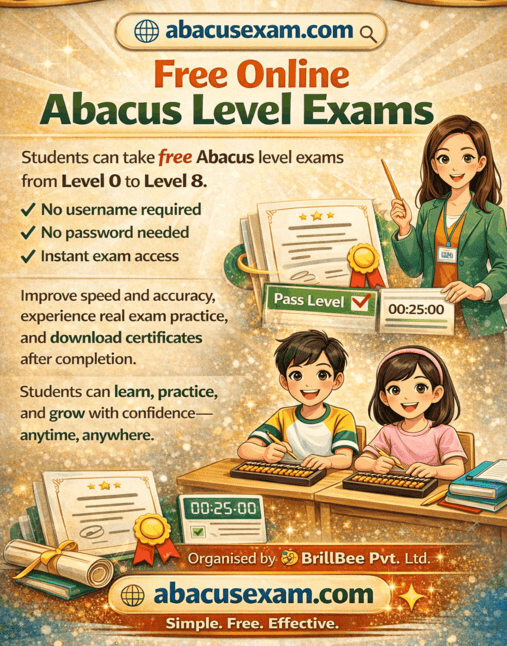
Students who want to improve their calculation speed and accuracy can also do regular practice.
You can try abacus practice, abacus exams, and 1-minute mental math challenges here:
Practice on Brillbee Academy
Real-Life Examples
Seven-year-old Riya from Jaipur hated math and cried before tests. After six months of abacus, she started solving problems mentally and even volunteered answers in class. Her teacher noticed the change in confidence.
In the UK, 9-year-old Ethan struggled with basic addition due to anxiety. Abacus training helped him visualize numbers clearly. Within four months, he was faster than many classmates and no longer feared math lessons.
These stories are common. Parents across India, USA, Canada, Australia, and UAE share similar experiences of their anxious children becoming math enthusiasts.
Benefits of Abacus for Math Anxiety
- Builds Confidence Through Success: Quick wins replace failure with achievement.
- Makes Math Visual and Fun: Beads turn numbers into a game-like experience.
- Improves Concentration: Focused bead movement trains attention naturally.
- Reduces Fear of Mistakes: Finger movements allow easy correction without judgment.
- Develops Whole-Brain Skills: Activates visualization and logic together.
- Creates Positive Association: Math becomes enjoyable instead of scary.
Detailed Explanation: Why Abacus Works So Well
Math anxiety often comes from feeling lost with abstract concepts. Abacus makes everything visible and touchable. Children see exactly what happens when they add or subtract beads.
Research shows abacus training improves arithmetic ability, attention, and response inhibition. Many children also develop better self-efficacy — the belief that “I can do math.”
Unlike pressure-filled tutoring, abacus progresses at the child’s pace. The multi-sensory method (sight, touch, movement) engages the brain differently, bypassing the usual anxiety triggers.
Internal tip: For more on overall brain benefits, read our guide on why parents should choose abacus over traditional math tutoring.
⭐ Expert Tips by Ashwani Sharma
As an Abacus Trainer & Mental Math Educator with 10+ years of experience, here are my practical tips:
- Begin with very short, fun sessions to avoid any pressure.
- Use lots of praise for effort, not just correct answers.
- Relate abacus skills to daily life — like calculating shopping totals mentally.
- Combine with school math so concepts reinforce each other gently.
- Monitor mood during practice — stop if frustration appears and try again later.
- Celebrate milestones with small rewards to build positive feelings.
- Be consistent but patient — anxiety reduction takes 3–6 months on average.
✅ Do’s and ❌ Don’ts in Abacus Learning
Do’s
- Do keep sessions playful and game-oriented.
- Do practice daily for short durations.
- Do encourage finger movement on imaginary abacus.
- Do link success to the child’s hard work.
- Do communicate regularly with the trainer about anxiety levels.
Don’ts
- Don’t compare your child with others who are faster.
- Don’t force long practice when the child feels tired or anxious.
- Don’t skip the physical abacus stage too quickly.
- Don’t use abacus as punishment or extra pressure.
- Don’t ignore signs of frustration — adjust the pace instead.
📈 What Results Can You Expect?
With regular, gentle abacus training, most children experience:
- Noticeable drop in math-related fear within 2–4 months
- Increased willingness to attempt math problems
- Better focus and concentration during studies
- Higher confidence in school math tests
- Improved speed and accuracy in calculations
- Overall positive attitude towards learning numbers
❌ Common Mistakes Parents Make
- Expecting instant results and getting disappointed early
- Choosing unstructured programs without experienced trainers
- Pushing too hard in the beginning, increasing anxiety
- Not maintaining consistent home practice
- Focusing only on speed instead of enjoyment
- Comparing progress with siblings or friends
❓ Frequently Asked Questions
What is math anxiety and how common is it?
Math anxiety is fear or nervousness about math that affects performance. It is very common — many children experience it at some point.
How does abacus help reduce math anxiety?
Abacus uses visual beads and fun methods that make math concrete and less scary, building success and confidence gradually.
At what age can children start abacus for anxiety?
Ideal age is 4 to 8 years, but even older kids can benefit if introduced gently.
Is abacus better than counseling for math anxiety?
Abacus works as a practical skill-building tool that often reduces anxiety naturally through achievement. It can complement other support.
How long does it take for abacus to show results in anxious kids?
Many parents see reduced fear and better attitude in 3–6 months with consistent practice.
Can online abacus classes help with math anxiety?
Yes, when they are interactive, paced properly, and led by experienced trainers with regular feedback.
Why choose abacusexam.com for your child?
We offer structured, child-friendly programs designed to build skills and confidence without pressure.
Summary
Yes — abacus training can significantly help children with math anxiety. By making math visual, hands-on, and fun, it replaces fear with confidence and enjoyment.
Instead of forcing more traditional practice, abacus gives children tools to succeed on their own terms. The result is not just better math skills, but a happier, more confident learner ready for future challenges.
If your child struggles with math anxiety, consider giving abacus a try. The gentle approach often creates the breakthrough parents have been hoping for.
🚀 Give Your Child a Smart Start!
Start Abacus Training Today and help them overcome math anxiety with confidence.
📞 Call/WhatsApp: +91 96641 11853