How to Improve Exam Scores in Abacus

Hello there, fellow parents, teachers, and curious learners. If you’re here, you’re probably wondering how to help a child shine brighter in their abacus journey. As Ashwani Sharma, Director of Mission Abacus Private Limited in Jaipur, India, I’ve spent years guiding young minds through the world of mental math. It’s rewarding to see that spark of confidence ignite when they tackle tricky problems. Today, let’s talk about something close to many hearts: how to improve exam scores in abacus. Whether you’re a homeschooler in Canada or a teacher in the UAE, these tips can make a real difference. Abacus isn’t just about beads and calculations—it’s about building lifelong skills in focus and speed. Over the next few sections, I’ll share practical advice drawn from my experiences, helping you support your child’s progress without overwhelming them.
Table of Contents
- Understanding Abacus Exams and Their Importance
- Building Strong Foundations for Better Scores
- Daily Practice Routines That Work
- Strategies to Improve Exam Scores in Abacus
- Parental Involvement in Abacus Success
- When Abacus May Not Be Enough: Realistic Expectations
- Benefits for Students
- Benefits for Parents
- Benefits for Teachers
- Frequently Asked Questions
- Conclusion
Understanding Abacus Exams and Their Importance
Abacus exams test more than just arithmetic—they evaluate a child’s ability to visualize and compute mentally under time pressure. In my years working with students from diverse backgrounds, I’ve seen how these assessments build resilience.
Think about international learners in places like Norway or Australia, where hybrid education blends online sessions with hands-on practice. Abacus fits perfectly into this, bridging traditional tools with digital platforms.
But why focus on scores? High marks open doors to advanced levels, boosting overall math confidence. It’s not about perfection; it’s about steady growth.

Building Strong Foundations for Better Scores
Start with the basics. Ensure your child grasps bead movements and simple additions before diving deeper. This prevents frustration later on.
Over the years, I’ve noticed that beginners who rush often stumble in exams. Take time to review fundamentals weekly—it’s like laying bricks for a sturdy house.
For homeschoolers in the USA or Czechia, incorporate fun games to reinforce these skills. Turn it into play, not drill.
Key Techniques for Foundational Improvement
Focus on finger coordination first. Slow, deliberate practice leads to faster mental math down the line.
Incorporate visual aids. Draw abacus grids on paper for offline practice, especially useful in areas with screen fatigue from online learning.
Common Mistakes to Avoid in Basics
Skipping warm-ups is a big one. Always start sessions with easy sums to build momentum.
Assuming all kids learn the same way ignores individual paces—tailor approaches for better exam readiness.
Daily Practice Routines That Work
Consistency is key. Aim for 20-30 minutes daily rather than cramming. This mirrors how cross-border tutoring sessions are structured, keeping things manageable.
Mix it up with timed drills and untimed reviews. Students who practice regularly, appear for level exams, and participate in competitions show faster improvement in speed, accuracy, and confidence.
For families in India or the UK, blend this with school schedules to avoid burnout.
Scheduling Tips for Busy Families
Block out specific times, like after breakfast. Make it a family ritual to encourage supporting children in mental math.
Use apps for reminders, but balance with offline tools to combat screen fatigue.
Incorporating Fun Elements
Turn practice into games. Reward progress with stickers or story time—keeps motivation high.
In my experience working with students, those who enjoy the process score higher without feeling pressured.
Strategies to Improve Exam Scores in Abacus
Here we dive into targeted tactics. First, master time management. Exams have strict limits, so practice under simulated conditions.
Check out our guide on Abacus exam duration & time management tips for detailed breakdowns—it helps visualize the flow.
Next, focus on accuracy over speed initially. Build from there.
Mental Visualization Drills
Close eyes and “see” the abacus. This boosts scores by enhancing internal calculations.
For international learners, online platforms offer virtual abacuses, making practice accessible anywhere.
Error Analysis for Score Improvement
Review mistakes post-practice. Ask: What went wrong? This reflective habit turns weaknesses into strengths.
Wondering how this ties to broader math? Explore how abacus boosts everyday math skills—it often surprises parents how it helps in school subjects.

Parental Involvement in Abacus
Parents play a pivotal role. Your encouragement can transform a child’s attitude toward learning.
Family support in abacus learning means sitting together, discussing progress without judgment.
In global contexts like New Zealand or the UAE, where online learning growth is booming, parents can join virtual classes too.
Ways Parents Can Guide Training
Offer gentle reminders for practice. Celebrate small wins to build confidence.
Avoid comparisons—each child’s journey is unique.
Involving Siblings or Peers
Group sessions foster healthy competition. It’s like a mini community, mirroring international exam structures.
Over the years, I’ve noticed families who learn together see quicker improvements.
What if you’re a beginner parent yourself? Start simple—learn alongside your child for that shared bond.
When Abacus May Not Be Enough: Realistic Expectations
Abacus is powerful, but it’s not a magic fix for all math woes. If a child struggles with underlying issues like attention deficits, additional support might be needed.
In hybrid education setups, combine abacus with tutoring for gaps in math confidence.
Parents should understand limitations: It’s excellent for arithmetic but less so for abstract algebra. Balance it with school curricula.
This honesty helps set achievable goals, preventing disappointment.
Benefits for Students
Students gain sharpened focus. Abacus hones concentration, useful beyond exams—in sports or arts.
It builds resilience. Facing timed challenges teaches perseverance, vital in today’s fast-paced world.
Plus, the joy of mastery. Seeing scores rise instills pride, encouraging lifelong learning.
For more on these perks, dive into our piece on abacus benefits for students—it’s eye-opening.
Benefits for Parents
As a parent, you’ll witness growth firsthand. It’s fulfilling to see your child tackle problems independently.
It strengthens bonds through shared activities, like parent guidance in abacus training.
In places like Australia or Canada, it eases worries about math confidence gaps in schools.
Benefits for Teachers
Teachers find abacus a versatile tool. It engages diverse learners, from beginners to advanced.
In classrooms across Norway or India, it supplements lessons, making math interactive.
It also provides measurable progress, helping track student development effectively.
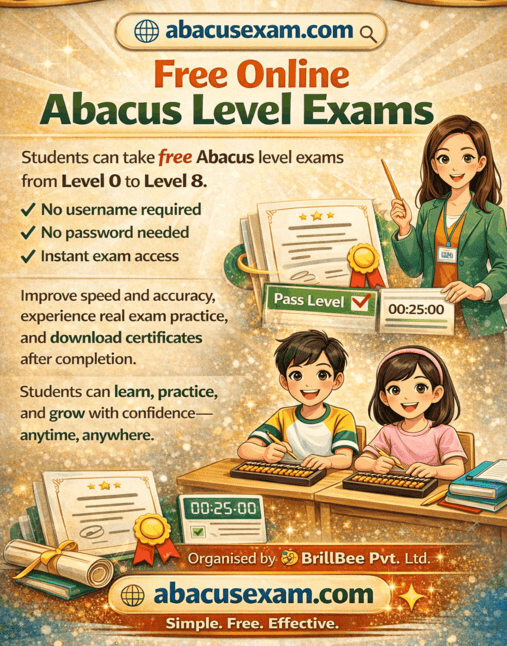
Our All-in-One Abacus Learning System at https://abacusshiksha.com, https://abacusexam.com, and https://abacuswala.com offers resources to integrate this seamlessly.

Frequently Asked Questions
Can abacus really improve exam scores quickly?
Yes, with consistent practice. Many see gains in 3-6 months, but it varies by child. Focus on enjoyment to sustain progress.
Is it worth starting abacus for homeschoolers?
Absolutely. It fits flexible schedules and boosts mental math. Parents often notice better focus in other subjects too.
How long does it take to prepare for an abacus exam?
Typically 4-8 weeks per level, depending on prior skills. Regular drills and reviews shorten this timeline.
What if my child gets frustrated during practice?
Step back and simplify. Use games or breaks to rebuild confidence. Patience is key—frustration often passes with support.
Are online abacus programs effective for international learners?
They are, thanks to online learning growth. Interactive tools mimic in-person sessions, ideal for cross-border tutoring.
Does abacus help with school math overall?
It does, by enhancing calculation speed and visualization. Many students apply these skills to everyday problems seamlessly.
Conclusion
Wrapping up, remember that improving exam scores in abacus is about the journey as much as the results. Stay patient, celebrate efforts, and watch the transformation unfold. As Ashwani Sharma, it’s been my privilege to share these insights with you. Keep nurturing that curiosity—it’s the real win. 😊✨