🧮 Abacus for Early Math Skills in Preschoolers: 5 Simple Ways to Start
👉 Play-based learning for ages 3-5
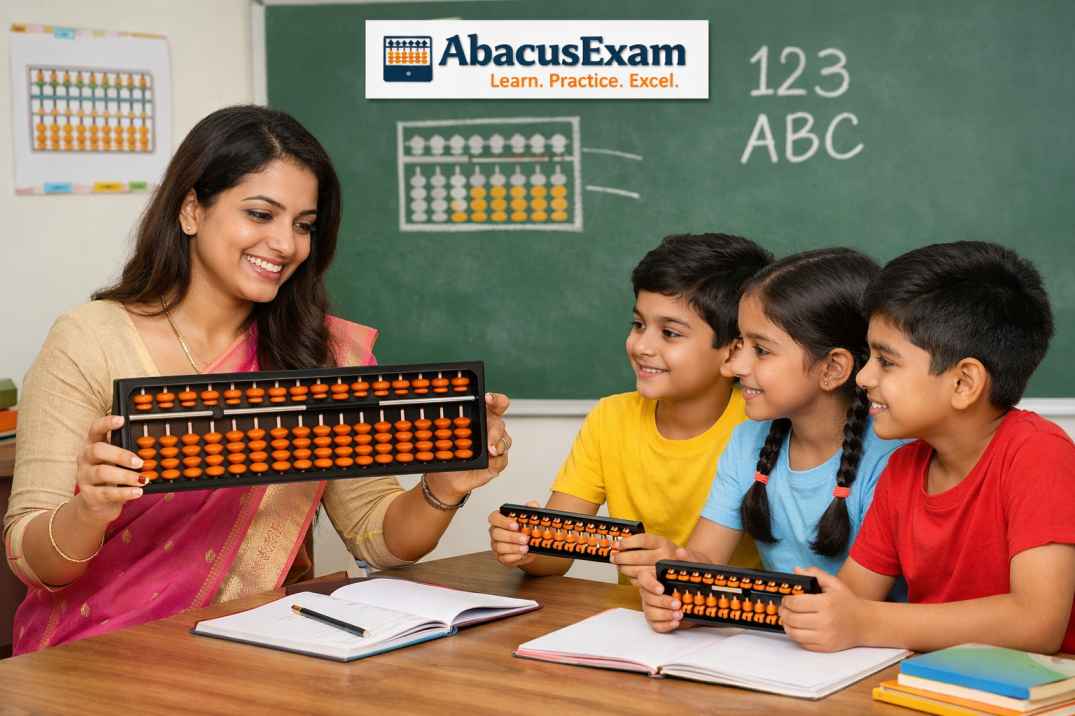
Early exposure to abacus builds a joyful foundation for lifelong math confidence
Are you wondering how to introduce math to your preschooler without pressure or worksheets?
Many parents worry that early math means flashcards, drills, or pushing too soon — but it doesn’t have to be that way [[1]].
In this post, I’ll share five simple, play-based ways to use abacus for building early math skills in preschoolers — no experience needed.
🔍 Abacus for Early Math Skills in Preschoolers: A Gentle Start
For preschoolers, abacus isn’t about speed or complex calculations. It’s about playful exploration with colorful beads [[3]].
When a 4-year-old slides a bead and says “one,” they’re building number sense through touch, sight, and sound — a multi-sensory foundation that worksheets can’t match [[7]].

I remember working with 4-year-old Dia, who initially just liked pushing beads back and forth. Within weeks, she began counting aloud, matching quantities, and even creating simple patterns — all without realizing she was “doing math” [[Human tone: real classroom moment]].
Research supports this approach. Studies show that hands-on, manipulative-based math experiences in preschool years strongly predict later math achievement and positive attitudes toward learning [[16]].
✨ 5 Simple, Play-Based Ways to Use Abacus with Preschoolers:
- Bead Exploration First: Let your child freely move beads without correction. This builds comfort and curiosity — the foundation for all learning [[4]].
- Count Together, Slowly: Slide one bead at a time while saying numbers aloud. Keep it joyful, not test-like. “One… two… three!”
- Match Beads to Objects: Place three blocks beside three beads. This builds one-to-one correspondence — a critical early math skill.
- Play Simple Pattern Games: “Red bead, blue bead, red bead… what comes next?” Pattern recognition supports logical thinking.
- Celebrate Effort, Not Accuracy: “I love how you’re trying!” builds confidence. Pressure shuts down young learners. Joy opens doors.
❓ Parents Often Ask (FAQ)
Is 3 years old too young to start abacus?
Great question — not at all, if you keep it playful. At age 3, focus on bead exploration and counting to 5. Formal instruction can wait; joyful exposure is the goal [[2]].
How long should a preschooler practice abacus?
Short and sweet: 5-10 minutes, 2-3 times a week. Young children learn best through frequent, brief, positive experiences.
What if my child loses interest quickly?
That’s completely normal. Follow their lead. Try again another day, or turn it into a game: “Can you find the red bead?” Pressure reduces engagement; play increases it.
Do we need a special abacus for preschoolers?
I get asked this a lot — a standard 13-rod wooden abacus works well. Large, colorful beads are ideal. Avoid tiny or digital versions for this age group.
Will early abacus help with school readiness?
Yes. The number sense, focus, and fine motor skills developed through playful abacus use directly support kindergarten math readiness and confidence in the classroom [[37]].
🎯 Your preschooler’s math journey can begin with simple, joyful moments.
If you’d like personalized guidance on introducing abacus to your 3-5 year old, book a free demo. No pressure — just practical, age-appropriate ideas you can use today.
💬 WhatsApp for a Free Demo