How Often Should Children Attend Abacus Classes for Optimal Results?
Every parent wants maximum benefits from abacus training. But how many classes per week are enough? Discover the proven frequency that delivers the best results without overwhelming your child.
Quickly jump to any section 👇
Introduction
As a parent, you invest time and money in abacus classes hoping for fast improvement in your child’s mental math, concentration, and confidence. But one big doubt remains: How often should children attend abacus classes for optimal results?
Too few classes and progress is slow. Too many and the child may feel tired or lose interest. With over 10 years of experience training hundreds of children across India and internationally, I’ve seen what really works.
The sweet spot for most kids aged 4–12 is **2 to 3 classes per week**, combined with short daily home practice. This balance delivers excellent brain development, speed, and long-term skills without burnout.
Problem Understanding
Many parents face confusion about class frequency. Some opt for once-a-week weekend classes thinking it’s enough. Others push for daily classes, leading to fatigue. Common issues include:
- Slow progress due to long gaps between classes
- Overloading the child with too many sessions
- Irregular home practice leading to forgotten techniques
- Difficulty balancing abacus with school homework
Without the right frequency, children may take longer to move from physical abacus to mental calculations or lose motivation midway.
Main Concept
Abacus learning involves two key parts: guided learning in class (new concepts, corrections, motivation) and reinforcement through home practice (repetition and visualization). Classes provide structure and expert guidance, while daily short practice builds speed and confidence.
Optimal frequency ensures new skills are introduced regularly while giving enough time for consolidation at home. Research and real classroom experience show that 2–3 sessions per week strike the perfect balance for brain development and skill mastery.
Step-by-Step Method: Recommended Schedule
- Beginner Level (Ages 4–7): 2 classes per week (45–60 minutes each) + 10–15 minutes daily home practice.
- Intermediate Level (Ages 7–9): 2–3 classes per week + 15–20 minutes daily practice.
- Advanced Level (Ages 9–12): 2 classes per week focusing on speed + 20 minutes daily mental math.
- Home Practice Routine: Use visualization, finger movements, and timed drills even without the physical abacus.
- Progress Check: Every 4–6 weeks, assess speed and accuracy to adjust frequency if needed.
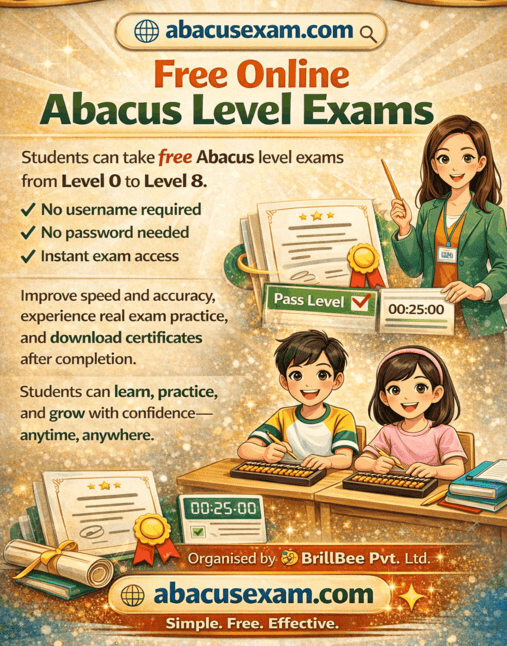
Students who want to improve their calculation speed and accuracy can also do regular practice.
You can try abacus practice, abacus exams, and 1-minute mental math challenges here:
Practice on Brillbee Academy
Real-Life Examples
8-year-old Vihaan from Jaipur attended 2 classes per week. With 15 minutes daily practice, he completed basic levels in 6 months and started mental multiplication confidently. His school math grades improved noticeably.
In the UK, 7-year-old Sophia joined 3 online classes weekly. Her parents kept practice short and fun. Within 4 months, her concentration improved and she began enjoying math instead of fearing it.
Many parents in USA, Canada, Australia, and UAE report similar success with 2–3 weekly sessions plus consistent home work.
Benefits of the Right Frequency
- Faster Skill Development: Regular classes help children master techniques quickly.
- Better Retention: Short gaps prevent forgetting bead movements and visualization.
- Improved Concentration: Consistent training strengthens focus and attention span.
- Balanced Learning: Enough time for school, play, and rest.
- Higher Motivation: Visible progress keeps children excited.
- Long-term Brain Benefits: Supports memory, visualization, and overall cognitive growth.
Detailed Explanation: Why 2–3 Times Per Week Works Best
Abacus training builds visualization “muscle” in the brain. Like any skill, it needs regular input (classes) and repetition (practice). Studies show sustained abacus training leads to changes in brain areas linked to working memory and numerical processing.
Once-a-week classes often create long gaps, causing children to lose momentum. Daily classes can cause fatigue in young kids. Two to three sessions provide steady guidance while allowing 4–5 days for home reinforcement.
For deeper insights on choosing abacus over regular tutoring, read our guide: Why should parents choose abacus over traditional math tutoring?
⭐ Expert Tips by Ashwani Sharma
As an Abacus Trainer & Mental Math Educator with 10+ years of experience, here are my practical tips:
- Choose 2 classes per week for beginners and busy schedules; add a third for faster progress.
- Keep home practice short (10–20 minutes) but daily — consistency beats long sessions.
- Schedule classes on non-consecutive days (e.g., Tuesday & Thursday) for better absorption.
- Make practice fun with timers, small rewards, and real-life math applications.
- Communicate regularly with the trainer about your child’s pace and energy levels.
- Combine abacus with school math so both support each other.
- Review progress every month and adjust frequency if the child shows signs of overload or slow growth.
✅ Do’s and ❌ Don’ts in Abacus Learning
Do’s
- Do maintain 2–3 classes per week for steady progress.
- Do encourage daily short home practice.
- Do balance abacus with playtime and schoolwork.
- Do celebrate small milestones to keep motivation high.
- Do choose a structured program with clear levels and assessments.
Don’ts
- Don’t rely only on once-a-week classes expecting fast results.
- Don’t force long practice sessions that cause tiredness.
- Don’t skip home practice even if classes are regular.
- Don’t compare your child’s speed with others.
- Don’t change frequency too often — give time for the routine to show results.
📈 What Results Can You Expect?
With 2–3 classes per week and daily practice, most children show these realistic outcomes:
- Basic addition/subtraction mastery in 3–4 months
- Transition to mental math within 6–8 months
- Improved concentration and school performance in 4–6 months
- Noticeable speed increase after 6–12 months
- Higher confidence and reduced math anxiety
- Strong foundation for competitive exams and lifelong skills
❌ Common Mistakes Parents Make
- Choosing only weekend classes with big gaps between sessions
- Expecting results without consistent home practice
- Over-scheduling classes leading to burnout
- Not monitoring practice quality at home
- Switching programs or trainers too frequently
- Focusing only on class attendance and ignoring daily reinforcement
❓ Frequently Asked Questions
How many abacus classes per week are ideal for beginners?
2 classes per week is ideal for most beginners, along with short daily practice.
Can once-a-week classes give good results?
Once-a-week works slowly if home practice is strong, but 2–3 times delivers faster and better results.
What is the best age to start abacus classes?
The ideal age range is 4–8 years when the brain is highly receptive to visualization skills.
How long does it take to see results from abacus training?
Visible improvements in confidence and basic skills appear in 3–6 months with optimal frequency.
Should online or offline classes be preferred?
Both work well if the trainer is experienced and the child gets regular interaction.
How much daily home practice is needed?
10–20 minutes of focused practice is sufficient when combined with 2–3 weekly classes.
Why choose abacusexam.com for your child’s training?
We offer structured levels, experienced guidance, and flexible schedules designed for optimal results.
Summary
How often should children attend abacus classes for optimal results? The answer is **2 to 3 times per week**, paired with consistent short daily practice at home. This frequency provides the right mix of guidance, repetition, and rest for maximum brain development and mental math mastery.
Every child is unique, so observe your child’s energy and progress, then fine-tune the schedule. With the right balance, abacus training can transform your child’s relationship with math and build skills that last a lifetime.
🚀 Give Your Child a Smart Start!
Start Abacus Training Today with the right frequency for lasting results.
📞 Call/WhatsApp: +91 96641 11853