Abacus Learning Milestones Parents Should Know

Learning abacus is an exciting journey, not just for children, but also for parents and educators guiding them. As a parent, understanding the abacus learning milestones parents should know helps you support your child effectively, track progress, and celebrate small achievements along the way.
I’m Ashwani Sharma, Director of Mission Abacus Private Limited, based in Jaipur, India. Over the years, I’ve had the privilege of guiding thousands of children through abacus programs and witnessing firsthand the transformation in their mental math abilities, focus, and confidence. When parents understand these learning milestones, they not only help their children progress faster but also make the journey more joyful and stress-free.
Whether you’re a homeschooling parent, a classroom teacher, or an international tutor, these milestones are globally relevant. From early counting skills to advanced mental arithmetic, this guide covers what parents should look for and how they can provide meaningful support.
Table of Contents
- Understanding Abacus Learning Milestones
- Parental Involvement in Abacus Learning
- Experience-Based Insights from Years of Teaching
- When Abacus May Not Be Enough
- Benefits of Abacus Milestones
- Reflective Questions for Parents
- FAQs
- Conclusion
Understanding Abacus Learning Milestones
Every child progresses through the abacus journey differently, but there are common milestones that parents can look out for. These milestones indicate readiness for more advanced concepts and help maintain motivation.
Early Counting and Number Recognition
In the initial stages, children typically start by recognizing beads, understanding the abacus layout, and connecting it with numbers. By age 4–6, many children can accurately count 1–10 on the abacus and associate it with written numerals.
Clarification: Why Early Counting Matters
Early counting is the foundation of mental math. Children who master counting beads develop a strong number sense, which is crucial for future operations and boosts overall math confidence.
Basic Operations: Addition and Subtraction
Once counting is comfortable, children progress to addition and subtraction. Here, milestones include performing sums up to 20 or 50, first on the physical abacus and gradually in mental calculations.
Clarification: Tracking Progress
Parents can notice improvement when children start visualizing bead movement mentally without touching the abacus—a sign they are moving toward mental arithmetic.
For guidance on pacing these exercises, see our Abacus exam duration & time management tips, which help children build speed systematically.
Intermediate Milestones: Multiplication and Division
By ages 7–9, children typically begin multiplication and division. Milestones here include multiplying two-digit numbers mentally or dividing numbers without errors. Parental support during this stage helps children consolidate their understanding and prevents frustration.
Advanced Mental Arithmetic
Around ages 9–12, advanced mental arithmetic becomes the focus. Children can perform complex calculations entirely in their mind. Milestones include faster computation, fewer mistakes, and beginning to solve problems under timed conditions.
Clarification: Partial Focus Keyword Context
Parents can reinforce these milestones through parent guidance in abacus training, gently timing practice sessions and encouraging accuracy over speed.
Parental Involvement in Abacus Learning

Parents play a critical role in reinforcing abacus learning milestones. Active involvement can accelerate learning, boost confidence, and make the child’s journey enjoyable.
Supporting Children in Mental Math
When parents actively practice mental math alongside children, they help reinforce skills learned in class. Even 10–15 minutes daily of supporting children in mental math can create consistent progress.
Family Support in Abacus Learning
Family support includes celebrating small wins, offering encouragement during challenges, and integrating abacus learning into daily activities. Over time, children develop not only arithmetic skills but also discipline and focus.
“Students who practice regularly, appear for level exams, and participate in competitions show faster improvement in speed, accuracy, and confidence.”
Experience-Based Insights from Years of Teaching
In my experience working with students from different countries, I’ve noticed that children benefit most when milestones are recognized and celebrated. Over the years, I’ve observed patterns:
- Children who receive structured guidance at home outperform those with irregular practice.
- Parental understanding of milestones reduces anxiety around international exams and hybrid learning setups.
- Early mastery of basic operations predicts long-term success in mental arithmetic.
Online learning growth and cross-border tutoring trends have made it easier for parents to engage actively, even in hybrid education models. However, screen fatigue can impact practice, so balancing digital sessions with hands-on abacus work is essential.

When Abacus May Not Be Enough
While abacus training strengthens mental calculation, it doesn’t always fully address broader math challenges. Parents should understand:
- Conceptual understanding of word problems may require additional instruction.
- Advanced algebra, geometry, and applied math require complementary teaching.
- Motivation and engagement are crucial; milestones alone don’t guarantee a love for math.
Recognizing these limits helps parents provide holistic support without placing undue pressure.
Benefits of Abacus Milestones
For Students
- Enhanced mental calculation speed and accuracy
- Improved concentration and memory
- Greater confidence in tackling school math problems (Can Abacus help in school maths?)
For Parents
- Clear understanding of progress helps manage expectations
- Ability to guide children effectively at home
- Stronger parent-child collaboration in learning
For Teachers
- Easier identification of individual student strengths and areas for support
- Structured curriculum alignment with learning milestones
- Ability to provide targeted feedback
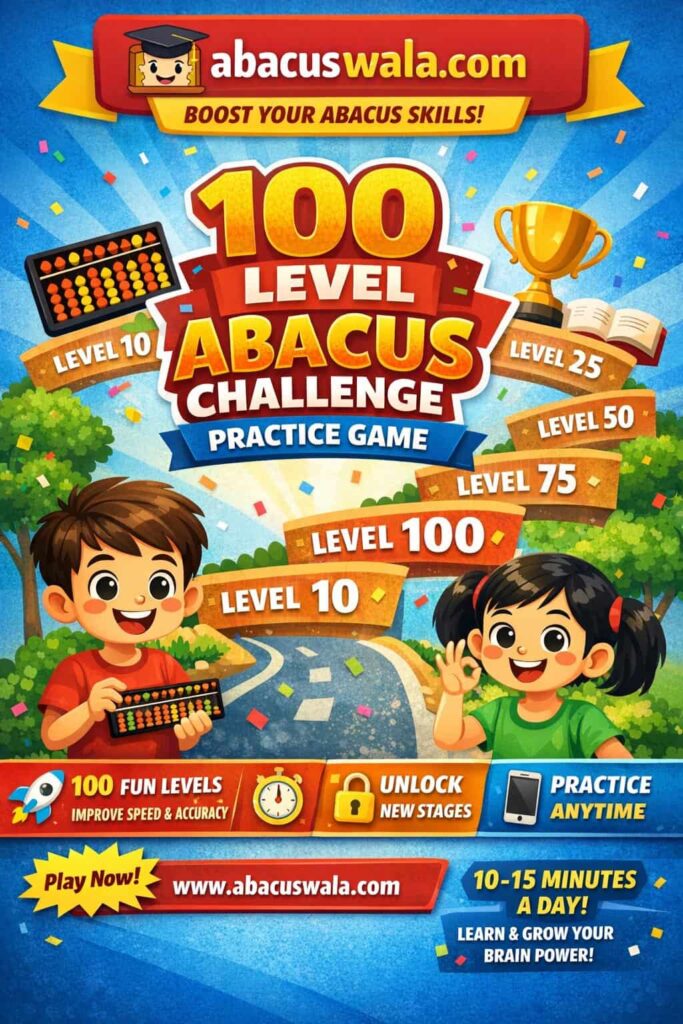
Parents can also explore an All-in-One Abacus Learning System integrating lessons, exercises, and assessments across multiple platforms (abacusshiksha.com, abacusexam.com, abacuswala.com) to enhance progress.
Reflective Questions for Parents
Take a moment to ask yourself:
- Am I aware of my child’s current milestone and what comes next?
- Do I celebrate small wins to maintain motivation?
- Is my support consistent without adding pressure?
Reflecting helps maintain a positive and mentor-like approach, critical for long-term success.
FAQs
1. Can abacus learning improve my child’s overall math skills?
Yes. While abacus focuses on calculation, it strengthens number sense, concentration, and problem-solving, which support broader math skills.
2. How long does it take to achieve advanced abacus milestones?
Typically, 2–3 years of consistent practice, depending on the child’s age, pace, and parental involvement.
3. Is parental involvement necessary for success?
Absolutely. Children thrive when families provide encouragement, guidance, and regular practice support.
4. Can abacus help with international exam preparation?
Yes. Abacus strengthens speed, accuracy, and confidence, which are valuable for timed tests across global curricula.
5. Are online abacus sessions as effective as in-person classes?
They can be, especially when combined with hands-on practice, hybrid education, and structured guidance.
6. Is it worth investing in multiple learning platforms?
Yes, a structured All-in-One Abacus Learning System helps track progress, provide assessments, and integrate lessons effectively.
Conclusion
Understanding abacus learning milestones parents should know is the key to supporting your child’s growth. Remember, every child learns at their own pace, and celebrating small achievements fosters a positive learning environment.
As you guide your child through this journey, keep in mind the balance between structured practice, encouragement, and awareness of limitations. With warmth, patience, and consistency, abacus learning can truly unlock your child’s mental potential 🌟.
Warm regards,
Ashwani Sharma ✨