Common Mistakes Students Make in Abacus Exams 🧮🎓

Welcome! I’m Ashwani Sharma, and for many years now, my days have revolved around classrooms, practice sheets, exam halls, and conversations with parents and teachers from different parts of the world. As Director at Mission Abacus Private Limited in Jaipur, India, I’ve had the opportunity to closely observe how students prepare for exams—and where they quietly struggle.
In this blog, we’ll explore Common Mistakes Students Make in Abacus Exams, especially the ones that are rarely talked about. These mistakes are not about intelligence or effort. They’re about habits, mindset, and guidance.
If you’re a parent feeling anxious before exam day, a teacher guiding beginners, or a student preparing for your next level—this guide is meant to walk beside you, not judge you 🌍.
📘 Table of Contents
- Understanding Abacus Exams Beyond Marks
- Why Mistakes Happen Even After Good Practice
- Common Mistakes Students Make in Abacus Exams
- Rushing Without Control
- Weak Visualisation Habits
- Ignoring Accuracy
- Emotional & Mental Mistakes Students Often Overlook
- Mistakes Parents Unknowingly Encourage
- Teaching Gaps That Affect Exam Performance
- Time Management: The Silent Challenge
- When Abacus May Not Be Enough
- Using Exams, Practice & Competitions Together
- A Reflective Pause for Parents and Learners
- Frequently Asked Questions (FAQs)
- A Personal Closing Note

Understanding Abacus Exams Beyond Marks 📘
Abacus exams are often misunderstood.
Many people see them only as assessments of speed. In reality, they test something deeper:
- Focus
- Calm thinking
- Consistency under time pressure
Over the years, I’ve noticed that students who understand why they are appearing for an exam perform better than those who focus only on scores.
An abacus exam is a checkpoint—not a verdict.
Why Mistakes Happen Even After Good Practice 💡
One of the most confusing moments for parents is this:
“My child practiced well… so why did they make mistakes?”
In my experience working with students and teachers, most exam mistakes don’t come from lack of ability. They come from unexamined habits.
Practice builds skill.
Awareness refines it.
Common Mistakes Students Make in Abacus Exams 🧮
This section addresses the Common Mistakes Students Make in Abacus Exams that I’ve seen repeatedly across countries, age groups, and learning formats.
Rushing Without Control (H3: Common Abacus Exam Speed Mistakes)
Speed is important—but uncontrolled speed is the most common error.
Students often:
- Start too fast
- Skip mental checks
- Panic halfway
This usually leads to simple calculation errors.
Based on real classroom learning, students who slow down slightly at the beginning often finish stronger.
Weak Visualisation Habits ✍️
Abacus learning relies heavily on mental imagery.
A common mistake is:
- Moving fingers without clear bead visualization
- Guessing positions mentally

This weakens accuracy, especially in longer sums.
Strong visualization is like a clear map. Without it, even experienced learners get lost.
Ignoring Accuracy for Speed 🎯
Many students believe that faster answers mean better performance.
But exams value accuracy first, speed second.
Teachers often notice that students who check their mental answers—even briefly—score higher overall.
Emotional & Mental Mistakes Students Often Overlook 🧠
Fear of Making Mistakes
This is one of the most damaging mental blocks.
Students freeze because they fear:
- Losing marks
- Disappointing parents
- Comparing with others
Ironically, fear causes the very mistakes students want to avoid.
Confidence grows when mistakes are treated as feedback, not failure.
Carrying Practice Anxiety Into Exams
Practice should feel calm.
But some students practice under pressure every day, turning learning into stress. On exam day, that stress resurfaces.
A relaxed practice routine builds exam-day stability 🚀.
Mistakes Parents Unknowingly Encourage 📘
Parents mean well. Always.
Yet some habits unintentionally increase pressure:
- Asking daily “How many marks will you get?”
- Comparing siblings or classmates
- Treating exams as validation
In my experience, children perform best when parents show interest—not expectation.
Encouragement builds resilience. Pressure breaks focus.
Teaching Gaps That Affect Exam Performance 🎓
Teachers play a vital role in reducing Common Mistakes Students Make in Abacus Exams.
Sometimes, challenges arise when:
- Students move levels too quickly
- Mock exams are skipped
- Time limits are not practiced
Structured guidance helps students feel exam-ready rather than exam-afraid.
Time Management: The Silent Challenge ⏱️
Time management is one of the most underestimated exam skills.
Many students know the answers—but run out of time.
That’s why understanding how to pace oneself during an abacus exam is crucial. Guidance like this detailed explanation on managing abacus exam duration effectively helps learners approach exams calmly.
Time is not the enemy.
Lack of planning is.
When Abacus May Not Be Enough ⚖️
Let’s be honest and balanced.
Abacus alone may not help if:
- Practice is irregular
- Basics are rushed
- Emotional readiness is ignored
Some students need:
- Slower progression
- More revision
- Emotional reassurance
And that’s completely okay.
Learning is not a race.
Using Exams, Practice & Competitions Together 🌍
The most balanced learners use a combination of:
- Regular practice
- Level exams
- Healthy competitions
Platforms that support this balanced approach—often called an All-in-One Abacus Learning System—include:
- 🏅 Abacus Competition Platform: https://abacusshiksha.com
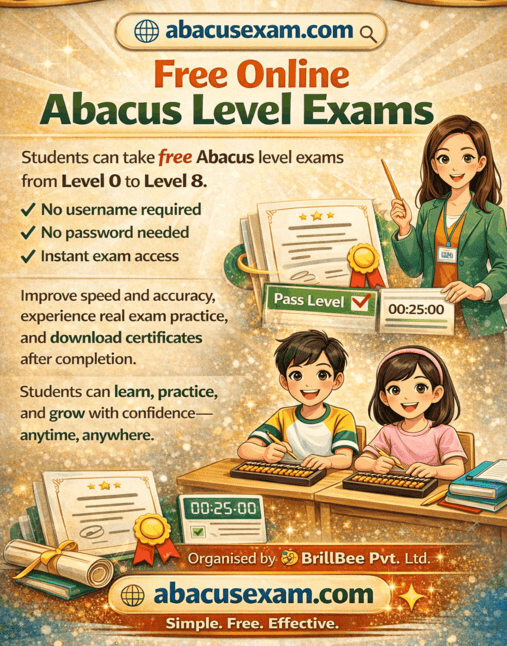
- 📝 Abacus Level Exam Platform: https://abacusexam.com
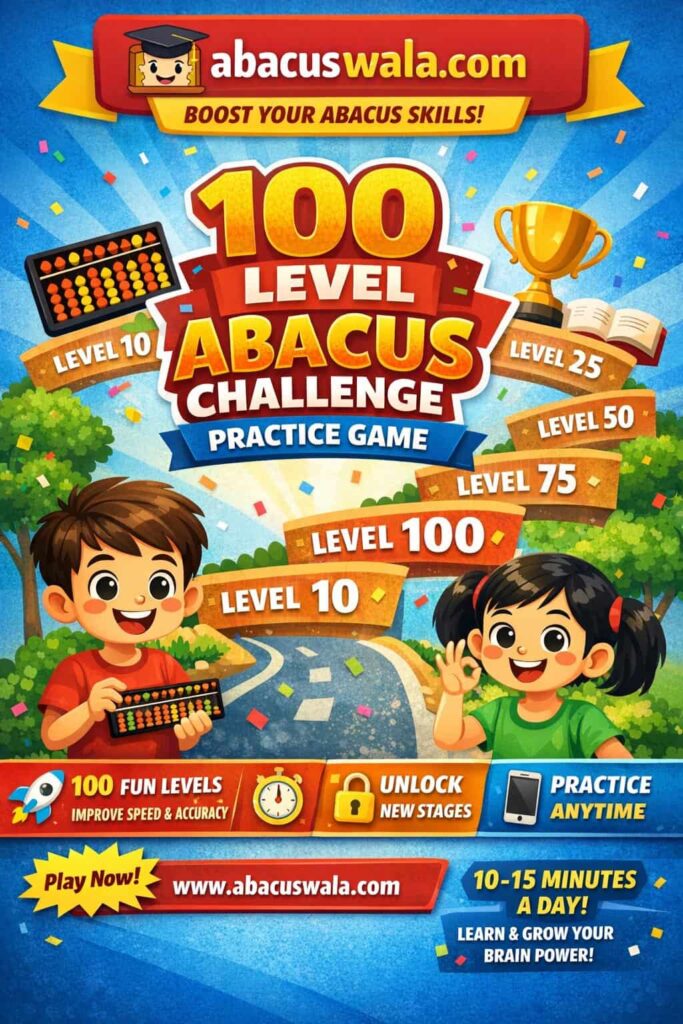
- 🎧 Abacus Audio Practice & 100-Level Challenge: https://abacuswala.com
Used thoughtfully, these tools support growth without overwhelm.
Students who practice regularly, appear for level exams, and participate in competitions show faster improvement in speed, accuracy, and confidence.
A Reflective Pause for Parents and Learners 💭
Let me pause here and ask you something gently:
Is the exam helping the child grow—or just proving something to adults?
Your answer matters more than the result sheet.
Benefits of Understanding Exam Mistakes 🌱
For Students
- Reduced fear
- Better focus
- Stronger self-belief
For Parents
- Clear expectations
- Healthier support role
- Less anxiety
For Teachers
- Improved exam outcomes
- More confident learners
- Stronger trust with families
Understanding mistakes is not criticism—it’s clarity.

Frequently Asked Questions (FAQs) ❓
Can beginners make too many mistakes in abacus exams?
Yes, and that’s normal.
Mistakes help beginners understand pacing and focus.
Is it worth appearing if a student is nervous?
Yes. Exams build confidence gradually.
Avoiding exams often increases fear later.
How long does it take to reduce exam mistakes?
With consistent practice, improvement is visible within a few months.
Do online abacus exams cause more mistakes?
Only if time management and focus are weak.
With preparation, online exams work well 🌍.
Can parents help reduce exam mistakes?
Absolutely. Calm encouragement makes a big difference.
A Personal Closing Note 🌿
After years of guiding students through abacus learning, I’ve learned one simple truth:
mistakes don’t mean weakness—they mean learning is happening.
If we treat exams as experiences rather than judgments, children grow calmer, stronger, and more confident.
As someone who continues to learn alongside students and teachers at Mission Abacus Private Limited, I hope this guide helps you look at abacus exams with more understanding and less fear.
Let learning stay gentle. Let progress stay steady 🧮✨
— Ashwani Sharma
Director, Mission Abacus Private Limited
Jaipur, India